
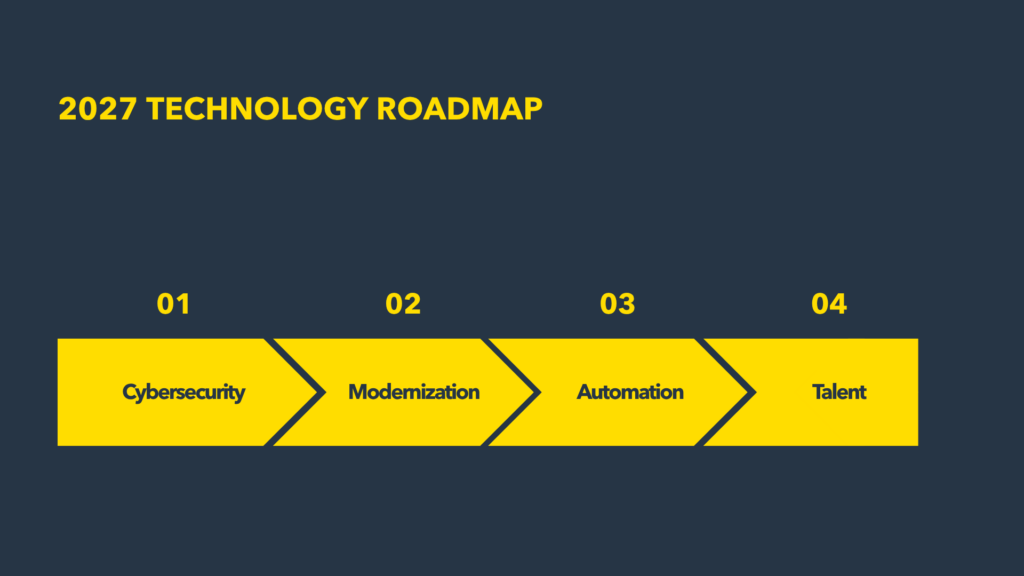
Technology leaders are entering a planning cycle where innovation must deliver measurable business value. The technology priorities for 2027 will increasingly focus on artificial intelligence, cybersecurity, modernization, automation and specialized talent. At the same time, CIOs and CTOs will need to balance innovation with operational efficiency, resilience and cost control.
The shift is already visible. Gartner’s 2026 IT agenda places AI, business transformation, cybersecurity, data analytics and executive leadership among the central topics for technology leaders. Its 2027-focused sessions also point toward emerging strategic technology trends and the growing importance of AI in enterprise strategy.
As a result, technology roadmaps should no longer operate as simple lists of tools to adopt. They should connect technology investments with business priorities, operational capabilities and measurable outcomes.
Technology priorities for 2027: move AI from pilots to value
Artificial intelligence will continue moving beyond experimentation. Organizations will increasingly look for practical ways to embed AI into applications, workflows and decision-making processes.
The rise of AI agents adds another layer to this transition. Gartner is already treating the AI agent ecosystem as a strategic topic for IT leaders, reflecting the growing need to evaluate deployment models, use cases and business value.
For 2027, technology teams should focus on five actions:
Identify processes where AI can produce measurable value.
Establish strong data and AI governance.
Integrate AI into existing applications and workflows.
Upskill teams to work effectively with AI-enabled tools.
Measure business outcomes instead of counting experiments.
The goal is not to implement AI everywhere. The goal is to apply it where it can improve productivity, decision-making, customer experience or operational performance.
Technology priorities for 2027: make cybersecurity part of architecture
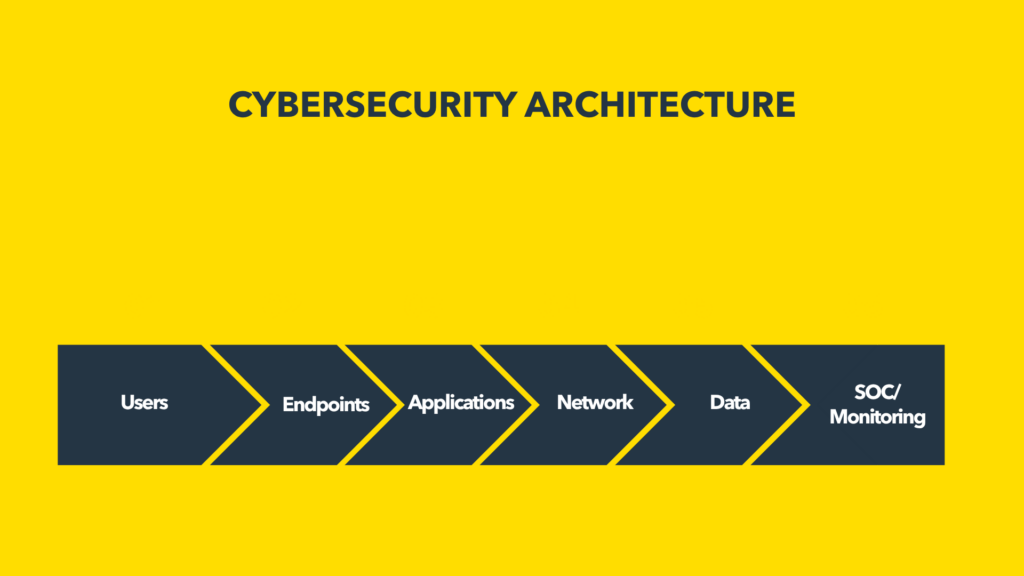
As organizations expand their use of AI, cloud services, APIs and distributed applications, their attack surface also grows. Cybersecurity therefore needs to become part of architecture and development rather than a final project checkpoint.
CIOs and CTOs will need stronger protection across identities, endpoints, applications, networks and data. They will also need continuous monitoring and faster incident response.
This direction is already reflected in public-sector technology strategies. Mexico’s INFOTEC 2026–2030 institutional program, for example, identifies cybersecurity, data protection, digital infrastructure and technological sovereignty as strategic areas.
Turning priorities into an executable 2027 roadmap
Identifying strategic areas is only the beginning. CIOs and CTOs must translate those priorities into initiatives with owners, budgets, timelines and measurable KPIs.
A practical roadmap can start with four questions:
- What must we protect? Critical data, identities, infrastructure and applications.
- What must we modernize? Systems that restrict scalability, integration or delivery speed.
- What can we automate? Repetitive workflows and manual operational tasks.
- What capabilities do we need? AI, cloud, cybersecurity, data and specialized development expertise.
This framework can help organizations avoid spreading resources across too many disconnected initiatives. Instead, technology teams can concentrate investment where it creates the strongest strategic impact.
The technology priorities for 2027 will ultimately be less about adopting more technology and more about building an organization that can continuously adapt. Companies that combine AI, cybersecurity, modernization, automation and specialized talent will be better positioned to respond to changing market demands without sacrificing stability or delivery speed.
If your organization is planning its 2027 technology roadmap and needs additional capacity to execute strategic initiatives, explore how Xideral can support your team through Staff Augmentation, Software Factory and cybersecurity.
Xideral Team