

Over the past few years, CRM platforms have become a standard investment for organizations looking to improve sales performance, customer relationships, and visibility across operations. However, despite widespread adoption, many companies struggle to turn their CRM into a real source of business value.
In fact, after implementation, CRM often becomes underused, poorly adopted, or reduced to a basic contact database. As a result, a key question emerges: is CRM truly a tech ally, or just another system in the stack?
The answer does not depend on the platform itself, but rather on how it is integrated, operated, and supported by the organization.
CRM as a standard, not a competitive advantage
Today, having a CRM no longer differentiates a company. Most mid-sized and enterprise organizations already rely on one. Nevertheless, companies that outperform their peers approach CRM differently.
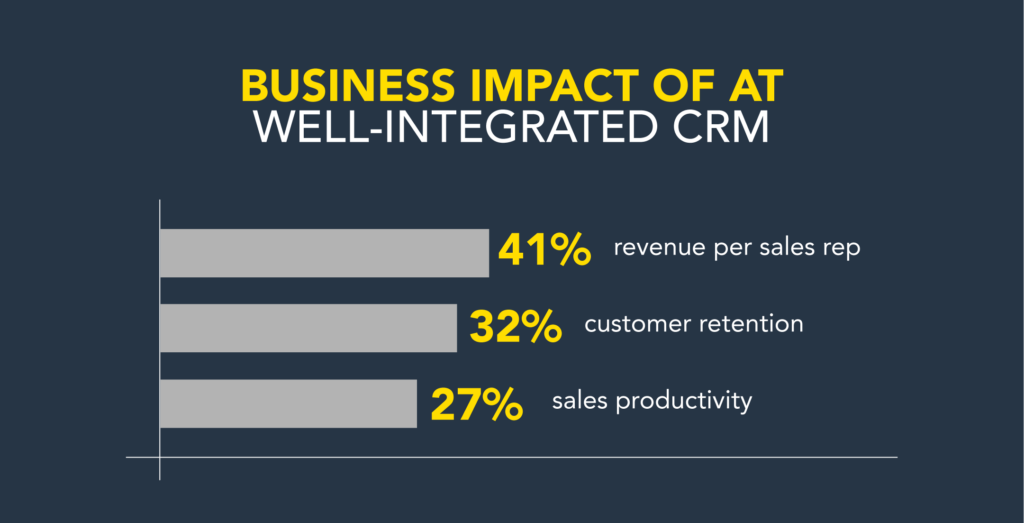
According to Salesforce, organizations that use CRM strategically achieve up to 41% higher revenue per sales representative, along with 32% higher customer retention and 27% increased sales productivity. However, these results do not come from implementation alone. Instead, they depend on execution, alignment, and continuous evolution.
Therefore, CRM becomes valuable only when it supports real business processes rather than existing as a standalone tool.
Integration: where CRM starts creating value
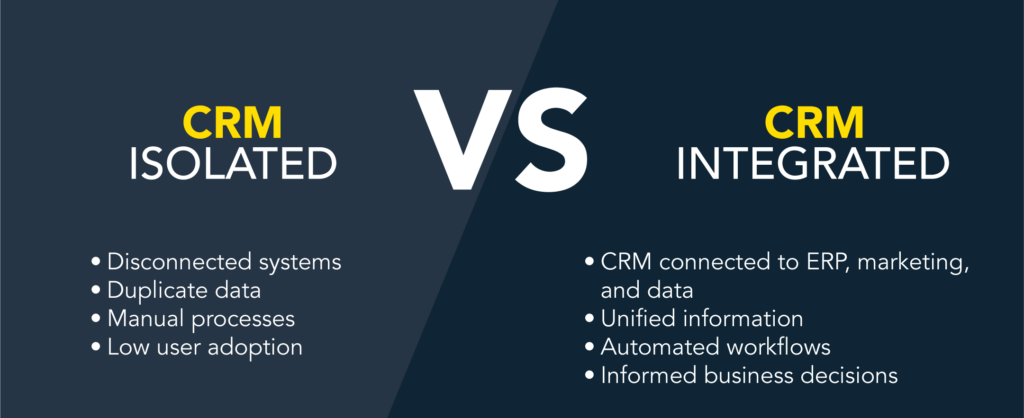
As organizations scale, CRM must operate within a broader technology ecosystem. Consequently, integration becomes essential. When CRM connects with ERP systems, marketing platforms, customer support tools, and data sources, information becomes consistent and actionable.
According to Nucleus Research, companies that integrate CRM with their core systems reduce sales cycles by up to 30%, while also cutting manual tasks by approximately 25%. As a result, teams spend less time managing data and more time focusing on strategic activities.
Moreover, integrated CRM environments eliminate silos and enable collaboration across departments, which directly impacts customer experience and operational efficiency.
The hidden challenge: talent and execution
Despite its potential, Gartner reports that nearly 46% of CRM projects fail to meet their original objectives. In most cases, the issue is not the technology, but the lack of specialized talent and poorly designed integrations.
Without experienced teams, organizations face data inconsistencies, incomplete workflows, and low user adoption. Consequently, reporting loses credibility, and decision-making relies on partial information. Over time, CRM becomes a source of friction instead of a business enabler.
Therefore, execution and expertise play a critical role in determining CRM success.
CRM as an organizational decision, not just an IT project
Although many companies treat CRM as an IT initiative, it is fundamentally an organizational decision. CRM affects how sales, operations, marketing, and customer service collaborate. As a result, it requires alignment across people, processes, and technology.
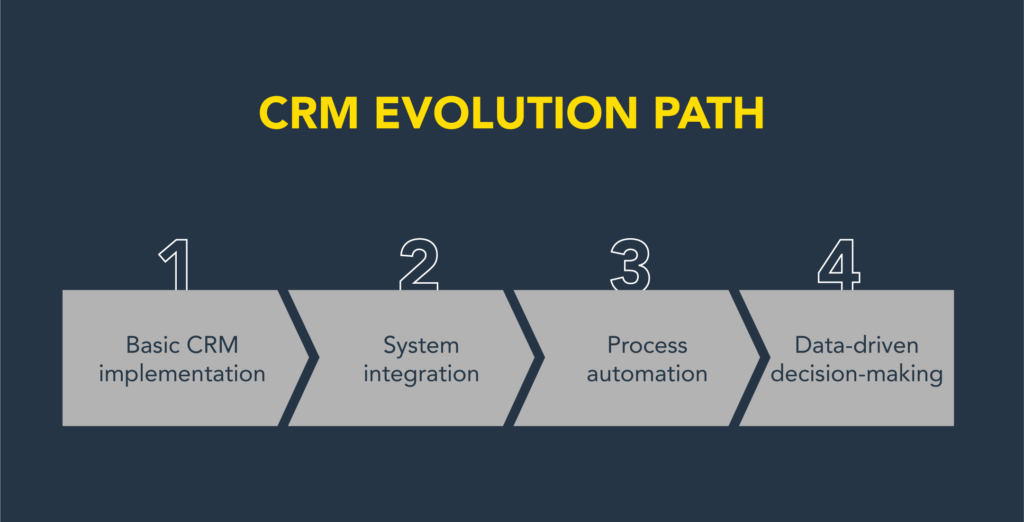
When implemented correctly, CRM enables process automation, standardization, and real-time visibility. Furthermore, it supports data-driven decision-making, which becomes increasingly important in competitive and fast-changing markets.
Thus, CRM should evolve continuously alongside the business rather than remain static after go-live.
Business implications: act now or accumulate friction
Organizations that delay CRM integration and optimization often experience operational bottlenecks, inconsistent customer experiences, and limited scalability. Meanwhile, companies that invest early transform CRM into a central business hub.
By acting proactively, organizations gain agility, transparency, and the ability to adapt quickly to change. Ultimately, the challenge is not choosing a CRM platform, but defining how it integrates, who operates it, and how it evolves over time.
Xideral as a strategic partner
At Xideral, we approach CRM as part of a broader technology ecosystem. We support organizations in implementing and evolving their CRM through specialized talent, system integration, process automation, and custom software development.
Our focus remains on execution, scalability, and alignment with real business objectives—ensuring CRM delivers measurable impact rather than unrealized potential.
CRM can be a powerful tech ally, or simply another system users avoid. The difference lies in integration, talent, and strategy. When these elements align, CRM shifts from a database to a growth engine that supports smarter decisions and sustainable results.
Xideral Team