

Poorly integrated systems don’t just create technical issues—they directly impact business performance. However, most companies fail to detect these costs because they don’t appear clearly in financial reports.
Instead, the problem hides in daily operations, rework, and delayed decision-making. For example, 48% of companies lose more than $60,000 USD annually due to disconnected systems.
Therefore, understanding the real impact of poorly integrated systems is critical for any organization aiming to scale without friction.
Where poorly integrated systems actually drain money
Although software spending is visible, operational losses are not. In many cases, costs accumulate through small, daily inefficiencies.
Main value leaks
- Delays in internal processes
- Data errors and duplication
- Dependence on manual workflows
- Lack of cross-team visibility
Moreover, these inefficiencies compound over time. What seems like a minor issue eventually impacts the entire operation.
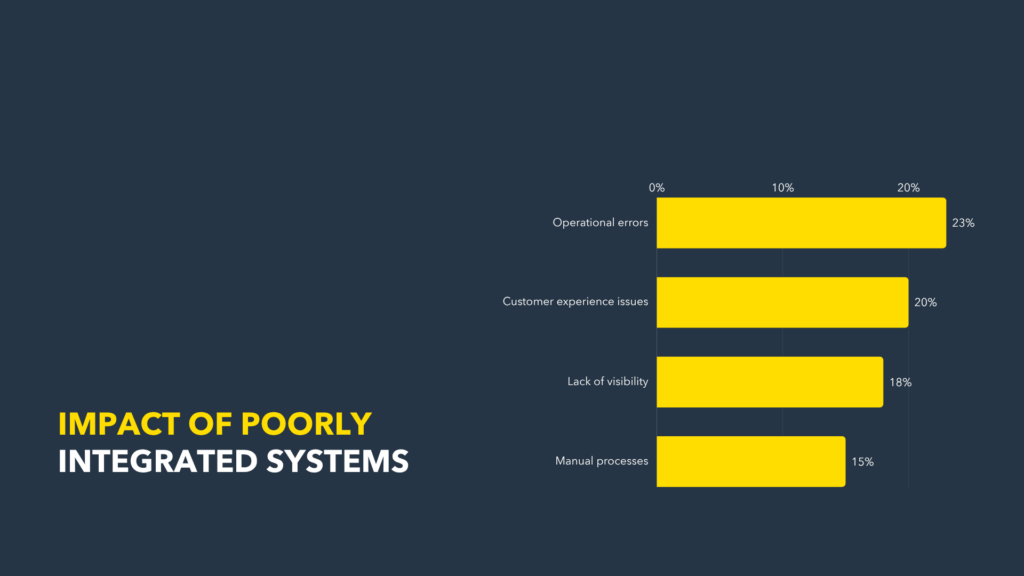
The impact of poorly integrated systems on productivity
Technical and operational teams are the first to feel the consequences.
On one hand, they spend time fixing issues. On the other, they lose focus on strategic work.
According to recent data:
- Up to 20 working days per year are lost due to tech issues
- 3 hours per week are spent fixing system failures
- 44% of teams have missed deadlines due to technical problems
As a result, poorly integrated systems don’t just cost money—they reduce execution speed.
Direct consequences for teams
- Operational overload
- Constant technical stress
- Reduced innovation capacity
Hidden costs
Beyond operational impact, there are costs that are rarely measured but directly affect growth.
Financial hidden costs
- Up to $500,000 USD in annual losses on average
- 20%–50% increase in costs due to legacy systems
- Higher maintenance and support expenses
Opportunity costs
- Lost customers due to poor experience
- Delayed decision-making
- Inability to scale processes
Furthermore, these costs are not linear. As the company grows, complexity and impact increase.
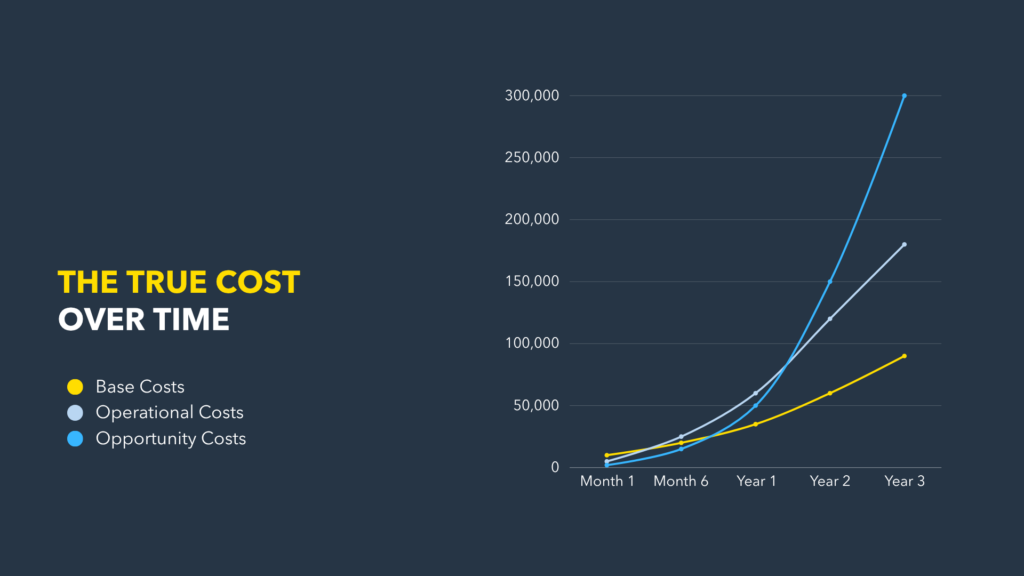
Poorly integrated systems as a scalability blocker
Many companies invest in multiple tools expecting efficiency. However, the average organization uses more than 20 different applications.
Without proper integration, this leads to:
- Fragmented ecosystems
- Dependence on manual integrations
- Low automation capacity
Additionally, every new tool increases complexity, creating what teams call “integration debt.”
Clear warning signs
- Heavy reliance on spreadsheets
- Duplicate data across teams
- Frequent integration failures
- Dependence on temporary fixes
How to fix poorly integrated systems
To eliminate these hidden costs, adding more tools is not the solution. Instead, companies must redesign their tech architecture.
Key actions
- Audit the current ecosystem
- Prioritize critical integrations
- Implement scalable solutions
- Reduce manual dependencies
- Invest in custom development
As a result, a strong integration strategy can:
- Reduce operational costs by up to 30%
- Improve team productivity
- Accelerate decision-making
Poorly integrated systems represent one of the biggest hidden costs in modern organizations. Although they don’t always appear in budgets, they affect every area of the business.
Therefore, solving this issue is not just a technical improvement, it’s a strategic decision.
If you want to eliminate operational friction and scale with technology aligned to your business, explore:
👉 Digital Transformation Services
Xideral Team