
For years, many companies viewed nearshoring primarily as a cost optimization strategy. The idea was straightforward. Moving operations closer to the United States allowed organizations to reduce expenses while maintaining geographic proximity.
Today, that perspective has changed.
Global supply chain disruptions, increasing demand for innovation, and the growing shortage of technology talent have transformed how companies think about location and collaboration.
Nearshoring is no longer only about operational efficiency. Strategic nearshoring has become a key business decision for organizations looking to accelerate growth, strengthen resilience, and access highly skilled technology talent.
In this context, Mexico has emerged as one of the most important technology and innovation hubs for companies operating across North America.
Strategic nearshoring is redefining business decisions
Location strategies now go far beyond labor cost considerations.
Organizations increasingly prioritize speed, flexibility, and the ability to collaborate across distributed teams. Strategic nearshoring allows companies to achieve these goals while maintaining proximity to their core markets.
Mexico offers clear advantages in this model. Logistics illustrate the difference. Land transportation from Mexico to the United States typically takes between 2 and 5 days, while maritime shipping from Asia can take 15 to 30 days or more.
Costs also reflect this gap. Truck shipments from Mexico often average around 2,500 USD, while shipments from China can range between 5,000 and 15,000 USD.
These differences create operational agility that companies increasingly view as a strategic asset.
Strategic nearshoring strengthens access to technology talent
Talent availability has become one of the main drivers of strategic nearshoring.
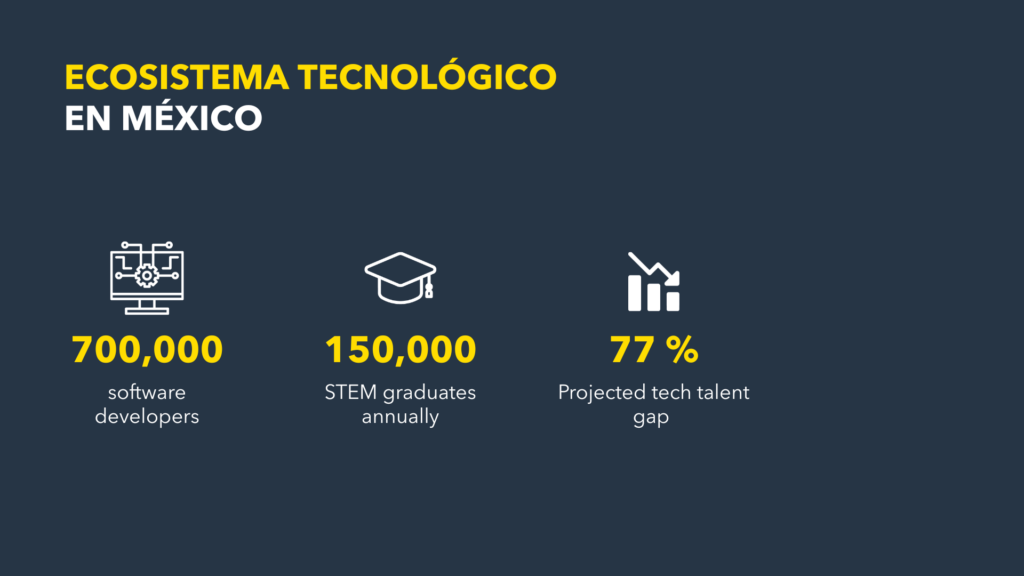
Mexico currently has more than 700,000 software developers, making it one of the largest technology talent pools in Latin America.
Additionally, universities graduate over 150,000 STEM professionals each year, continuously expanding the engineering and technology workforce.
This growing ecosystem enables companies to develop capabilities in areas such as
software development
artificial intelligence
data engineering
cloud infrastructure
automation
However, demand continues to rise rapidly. Industry estimates suggest that Mexico could face a technology talent shortage of up to 77 percent by 2025.
As a result, companies increasingly rely on specialized partners to access and scale technical teams efficiently.
Investment trends confirm the rise of strategic nearshoring
Foreign investment trends reinforce the importance of this shift.
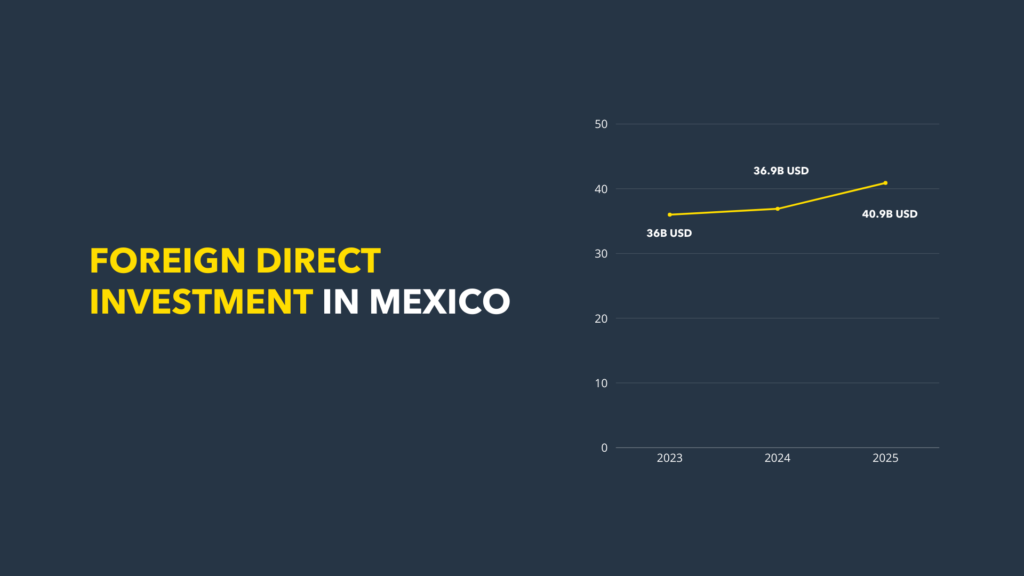
Mexico attracted over 40.9 billion USD in foreign direct investment in 2025, one of the highest levels recorded in the country’s recent history.
Much of this growth comes from companies strengthening operations closer to the North American market.
International organizations also estimate that nearshoring could generate 78 billion USD in additional exports across Latin America, with Mexico capturing roughly 35 billion USD of that opportunity.
These numbers highlight how strategic nearshoring is becoming a key driver of regional economic growth and technological collaboration.
What strategic nearshoring means for companies
Adopting strategic nearshoring requires a new perspective on growth.
Organizations no longer relocate operations solely to reduce expenses. Instead, they build distributed technology ecosystems that support innovation and collaboration.
Companies increasingly focus on
building cross-border technology teams
accelerating product development cycles
integrating specialized talent quickly
improving operational resilience
Geographic proximity also plays a crucial role. Teams in Mexico, the United States, and Canada often work within similar time zones, which enables real time collaboration and faster decision making.
This alignment significantly reduces operational friction and improves development velocity.
Acting now creates competitive advantage
Companies that adopt strategic nearshoring today gain several advantages.
They access specialized technology talent faster than organizations relying solely on local hiring.
They scale engineering teams more efficiently.
They strengthen their ability to respond to evolving market demands.
In a digital economy where innovation speed defines competitiveness, access to the right talent becomes a decisive factor.
Nearshoring is no longer simply about reducing operational costs.
Today, strategic nearshoring enables companies to build resilient, innovative, and scalable technology organizations.
In this environment, specialized partners play an important role in connecting companies with the talent and capabilities required to grow.
Xideral supports organizations across North America by providing access to highly skilled technology professionals through services such as Staff Augmentation, Headhunting, Software Factory, and Training Academies.
Because in the digital economy, access to the right talent can determine how fast a company can innovate and scale.
Xideral Team