

For many years companies focused primarily on competing for customers. As a result, marketing investment, sales performance and brand positioning became the main drivers of business growth.
However, the digital economy has significantly changed this dynamic.
Today organizations are discovering that growth depends not only on the number of customers they attract. Instead, it also depends on how quickly they can build teams capable of creating and scaling digital solutions.
For this reason, talent competition has become a critical strategic factor.
Companies that successfully attract and integrate specialized talent can execute their strategies faster. At the same time, they adapt more easily to technological change and identify new opportunities in the market.

The shift that is accelerating talent competition
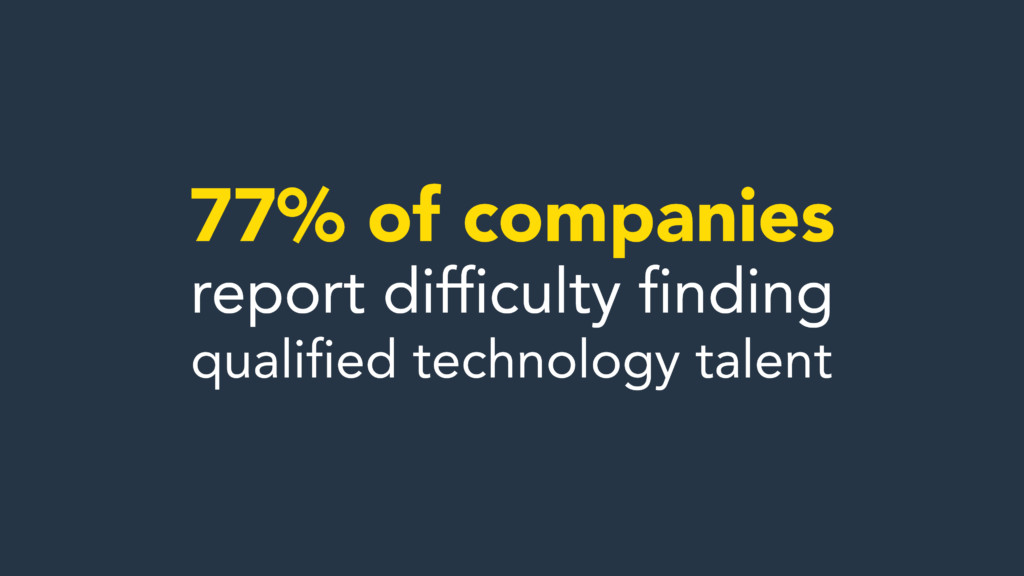
Digital transformation has dramatically increased the demand for technology professionals. Consequently, roles such as software developers, data specialists, cybersecurity experts and cloud architects have become essential for modern organizations.
At the same time, the global technology ecosystem continues to expand.
For example, the Salesforce ecosystem estimates that by 2026 there will be more than 9.3 million professionals working with Salesforce technologies worldwide.
Therefore, the competition landscape has evolved.
Companies are no longer competing only for market share. Instead, they are competing for the professionals capable of building and maintaining the digital platforms that support business growth.
Why talent competition directly impacts business performance
Talent competition affects several core capabilities inside an organization.
First, it accelerates innovation. Skilled technical teams can develop digital products, integrate emerging technologies and improve operational processes much faster.
Second, it strengthens execution capacity. Business strategies generate real value only when organizations have the teams capable of implementing them effectively.
Third, it improves adaptability. Organizations with strong technology teams can respond to market changes more efficiently. For instance, they can evolve their platforms, adopt new tools and launch digital services faster.
Consequently, the availability of specialized talent often determines how quickly a company can respond to new opportunities.
Talent competition in a global market
Another important change is the globalization of technology talent.
Previously, companies relied mostly on local hiring. However, remote collaboration and nearshore models have expanded access to global talent pools.
As a result, organizations increasingly build distributed technology teams that operate across multiple regions.
These teams remain aligned in time zones and collaboration practices. At the same time, they allow companies to access highly specialized professionals who may not be available locally.
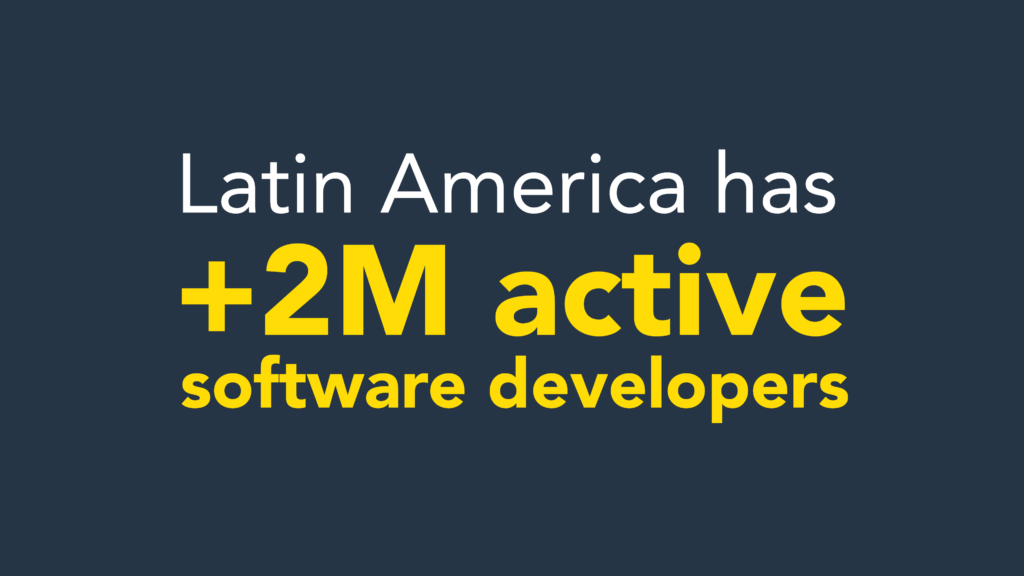
For many North American organizations, collaboration with technology professionals in Latin America has become a strategic advantage. In fact, it allows companies to accelerate development projects while maintaining close communication and operational efficiency.
Therefore, talent competition now occurs at a global level.
What happens when companies prioritize talent
Organizations that prioritize talent competition gain several strategic advantages.
First, they build stronger and more resilient technology teams. Consequently, they can execute complex digital initiatives with greater confidence.
Second, they create environments that support continuous innovation. In addition, talented professionals bring new perspectives and technical expertise that improve decision making.
Third, they accelerate the delivery of digital products and services.
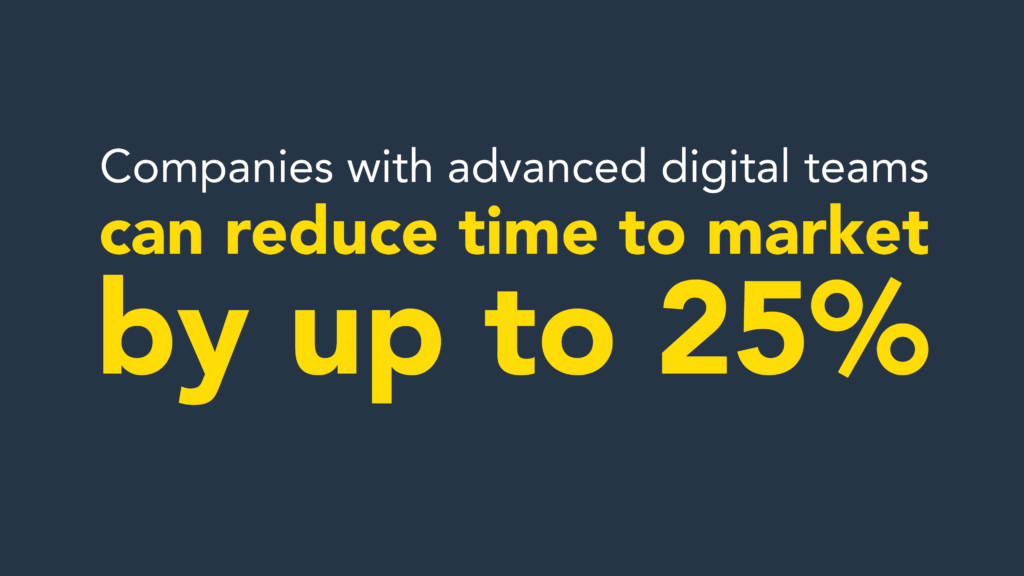
This directly impacts key business indicators such as time to market, product quality and operational scalability.
In other words, companies that compete effectively for talent also compete more effectively in the market.
Talent competition as a strategic capability
Developing a strong talent competition strategy requires more than traditional recruiting processes.
Instead, organizations need flexible talent models that allow them to integrate specialized professionals as technology initiatives evolve.
For example, companies may adopt distributed development teams, strategic technology partnerships or staff augmentation models that expand engineering capacity quickly.
Therefore, the goal is not simply to fill positions.
Rather, the objective is to build a sustainable talent structure that supports long term digital growth.
In the digital economy, competitive advantage depends on more than market access.
It also depends on the talent an organization can attract, integrate and develop.
Companies that actively compete for talent strengthen their ability to innovate, adapt and execute at speed.
At Xideral we support organizations that want to strengthen their technology capabilities. Through services such as Staff Augmentation, Headhunting and Software Factory, companies gain access to specialized talent aligned with their digital initiatives.
As a result, organizations can accelerate technology projects while building stronger teams for the future
Xideral Team