
The tech industry evolves rapidly. However, while companies invest heavily in technical expertise, they often overlook human capabilities.
As a result, teams struggle not because of a lack of knowledge, but due to poor communication, low adaptability, and weak collaboration.
Even highly skilled professionals can fail to deliver results if they cannot align with others or respond to change effectively. Therefore, organizations must rethink how they build and develop talent.
Closing this gap is no longer optional. It is a strategic move that directly impacts performance, retention, and long-term scalability.
Why the technical and human skills gap matters in IT teams
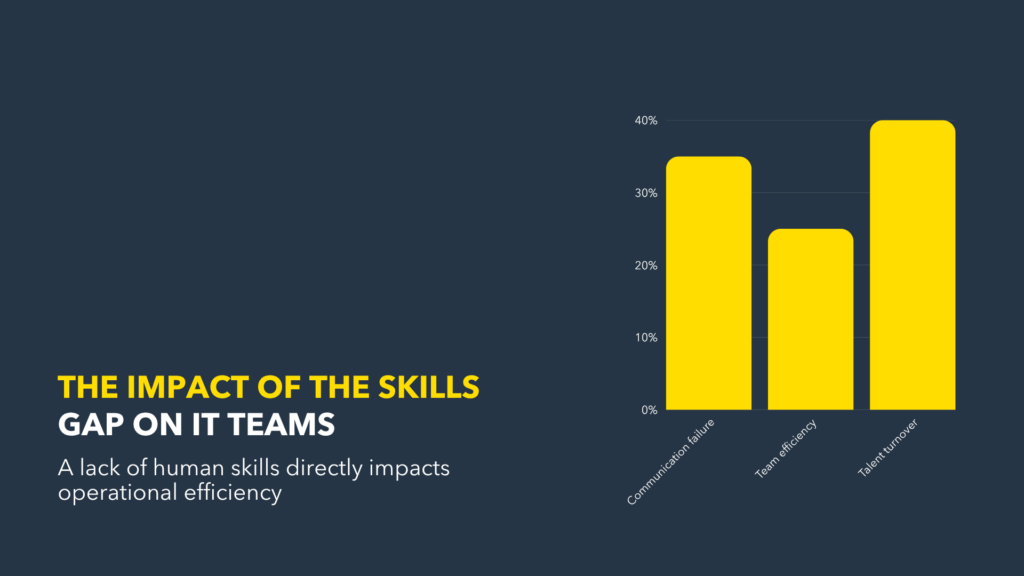
The imbalance between hard and soft skills creates friction across teams.
On one side, technical expertise includes coding, systems architecture, and tools. On the other, human capabilities involve:
- Communication
- Teamwork
- Adaptability
- Critical thinking
- Emotional intelligence
Benefits of strengthening technical and human skills in teams
Balancing both dimensions generates clear advantages.
For instance, teams that combine strong technical expertise with human capabilities:
- Collaborate more effectively
- Deliver projects faster
- Reduce internal conflicts
- Improve client satisfaction
Additionally, these teams become more autonomous and resilient. As a result, organizations gain stability and better long-term performance.
How to develop technical and human skills effectively
Closing the gap requires a structured and intentional approach.
Continuous measurement
First, organizations must evaluate both technical and interpersonal performance:
360° assessments
Continuous feedback loops
Collaboration-based KPIs
This allows leaders to identify real gaps and take action quickly.
Hybrid training
Next, combine technical training with human development:
- Communication workshops for technical roles
- Leadership programs
- Real-world team simulations
This approach ensures that learning translates into daily performance.
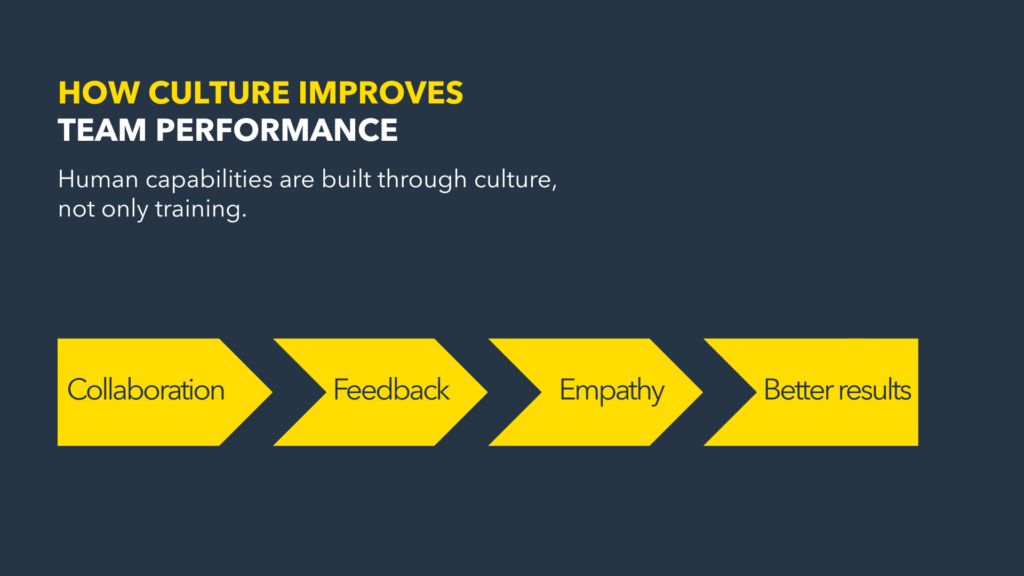
People-centered culture
Finally, culture plays a key role in sustaining change:
- Recognize collaborative behaviors
- Encourage open feedback
- Promote empathy, especially in remote teams
This creates an environment where human capabilities grow naturally.
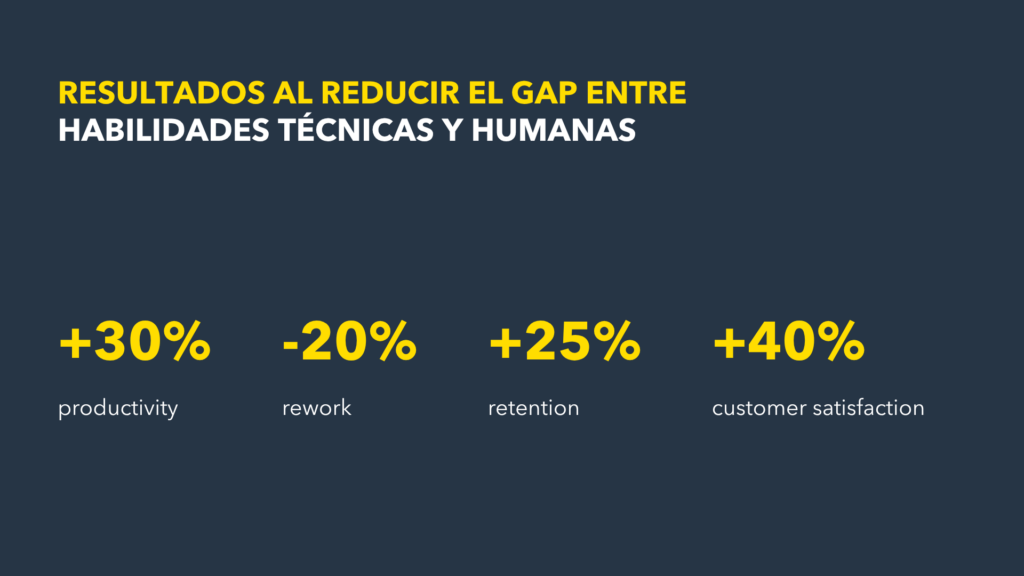
Results of improving technical and human skills in organizations
Companies that address this balance achieve measurable improvements:
Moreover, leaders become more effective because they can align people, not just processes.
In the long run, this strengthens both execution and organizational culture.
Best practices to sustain results
To maintain this balance over time:
- Continuously assess team performance
- Hire profiles with both technical and interpersonal strengths
- Encourage internal mentoring
- Use gamification to reinforce behaviors
- Align individual and team goals
Why this investment matters
Organizations that succeed today are not just technically strong. They are adaptable, collaborative, and aligned.
Therefore, investing in both dimensions creates a clear competitive advantage and enables sustainable growth.
Is your team technically strong but not reaching its full potential?
👉 Learn how to build high-performing teams: https://www.xideral.co
Is your team technically strong but not reaching its full potential?
👉 Learn how to build high-performing teams:
Xideral Team