
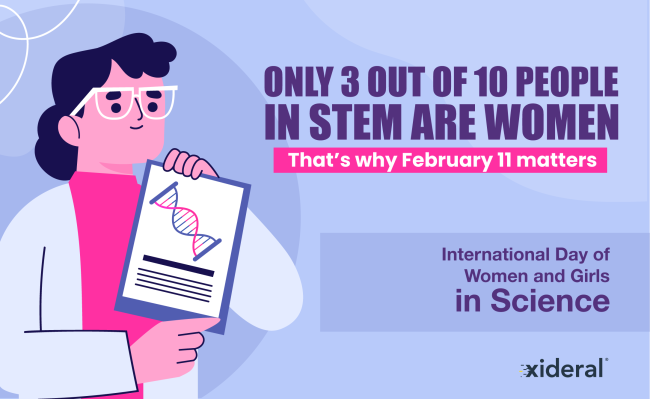
Every February 11, the International Day of Women and Girls in Science invites us to reflect on a reality that still defines the present: women in STEM remain underrepresented in the fields shaping the future. While technology continues to advance rapidly, female participation does not grow at the same pace. Therefore, this conversation is not symbolic—it is strategic.
Today, women represent only about 30% of the global STEM workforce. This number highlights a long-standing gender gap, but it also reveals a missed opportunity. When women are excluded from science and technology, innovation loses depth and relevance. Moreover, solutions emerge from limited perspectives. As a result, supporting women in STEM directly improves the quality of the technologies and scientific advances that affect everyday life.
Before going deeper, one key point deserves attention: this gap does not start in the workplace. Instead, it begins much earlier. Many girls show strong interest in science during childhood. However, over time, that interest often fades. This happens due to stereotypes, lack of visible role models, and educational environments that fail to foster inclusion. Consequently, valuable talent disappears long before entering universities or technical careers.
Women in STEM: A Gap That Still Limits Innovation
Women in STEM face structural barriers that go beyond access to education. Even when women enter technical fields, many encounter limited career growth, unconscious bias, and a lack of representation in leadership roles. In addition, glass ceilings continue to exist in both technical and decision-making positions.
However, when organizations commit to diversity, outcomes change. Diverse teams make better decisions, design more inclusive products, and adapt more effectively to complex challenges. For this reason, closing the gender gap in STEM is not only a matter of equity—it is a clear competitive advantage
Women in STEM Who Paved the Way
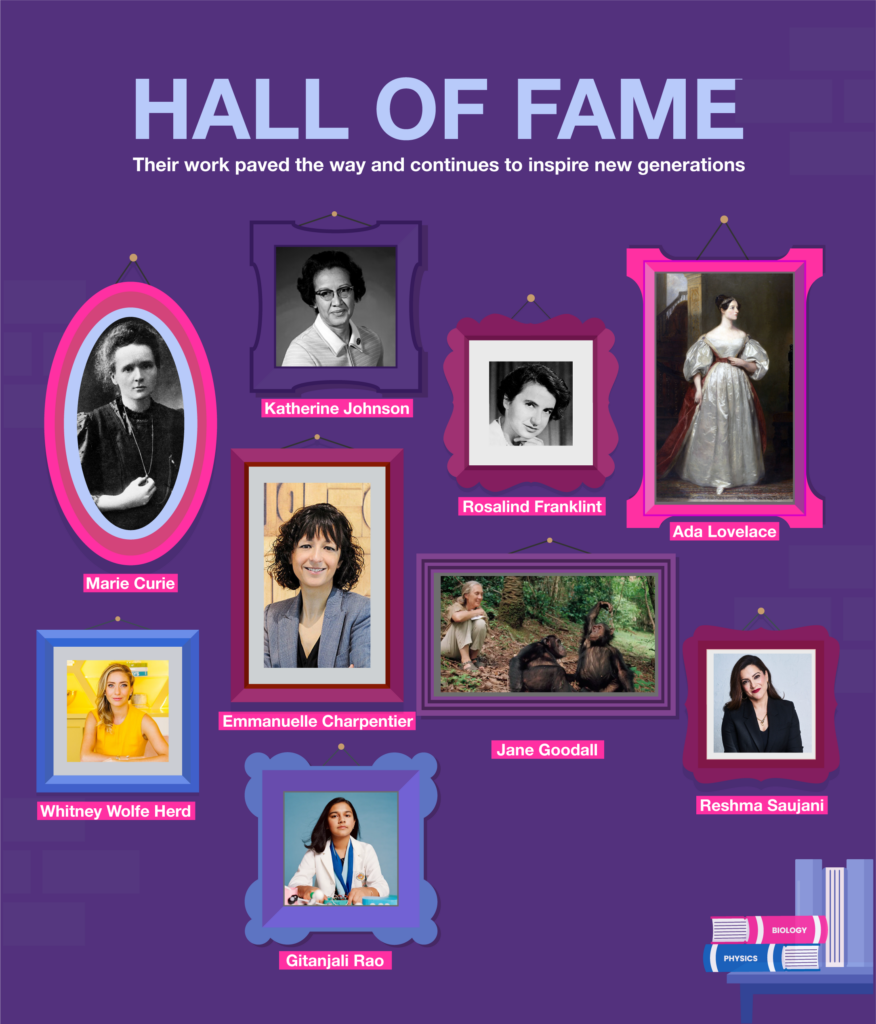
Discussing women in STEM also means recognizing those who laid the foundations. Marie Curie transformed physics and chemistry. Katherine Johnson made space exploration possible through her mathematical calculations. Ada Lovelace envisioned modern programming long before the digital age existed.
Moreover, pioneers such as Rosalind Franklin, Margaret Hamilton, and Grace Hopper proved that scientific progress has always depended on talent, not gender. Although their contributions were overlooked for years, today they serve as powerful role models for future generations.
These stories matter because they show what happens when women fully participate in science and technology: progress accelerates, and impact endures.
Women in STEM Today: Technology, Data, and Leadership
Today, women in STEM are not limited to laboratories or academic settings. They lead technology companies, develop artificial intelligence, build digital products, and make data-driven decisions. Figures like Fei-Fei Li, Radia Perlman, and Whitney Wolfe Herd demonstrate how modern STEM blends science, engineering, product development, and strategic leadership.
Still, representation remains uneven. Therefore, companies that actively support female talent strengthen not only their culture but also their capacity for innovation. Investing in women in STEM is no longer optional—it is a strategic business decision.
Girls in Science: The Future Starts Now
If we want more women in STEM tomorrow, we must support girls today. Talent grows through opportunity, visibility, and access to education. Examples such as Gitanjali Rao and Ann Makosinski show that age does not limit innovation. When a girl understands that science belongs to her as well, the impact multiplies.
In conclusion, supporting women in STEM means investing in a more innovative, diverse, and sustainable future. Science needs every perspective. And that future begins with the choices we make today.
👉 Want to discover more fascinating stories about technology? Don’t miss our upcoming posts.
Xideral Team