
Organizations across BFSI, Retail, and SaaS sectors face increasing pressure to innovate while maintaining complex legacy environments. Technology modernization has become a critical business strategy because it helps reduce technical debt, improve operational efficiency, and free development teams to focus on innovation rather than maintenance.
When engineers spend significant time fixing outdated systems, resolving infrastructure issues, or managing legacy integrations, product delivery slows down and operational costs rise. As a result, businesses struggle to respond quickly to changing market demands.
Why Technology Modernization Drives Competitive Advantage
Technical debt accumulates gradually through years of business growth, evolving requirements, and short-term technology decisions.
Over time, these factors create several challenges:
- Rising maintenance expenses.
- Increased operational complexity.
- Security vulnerabilities.
- Slower development cycles.
- Limited integration capabilities.
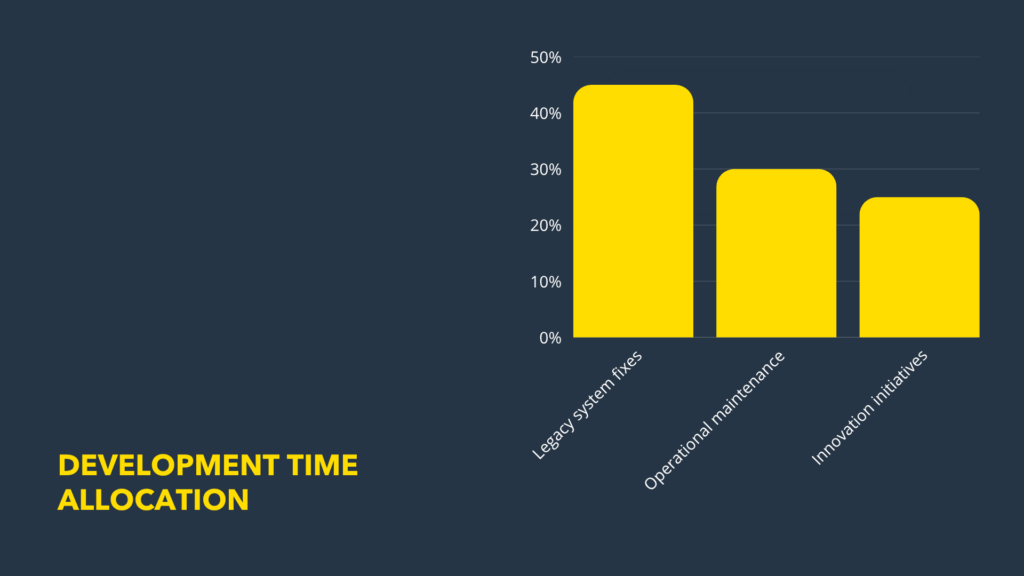
Every hour spent maintaining legacy applications represents an hour that could have been invested in innovation, customer experience, or revenue-generating initiatives.
Business Benefits of Technology Modernization
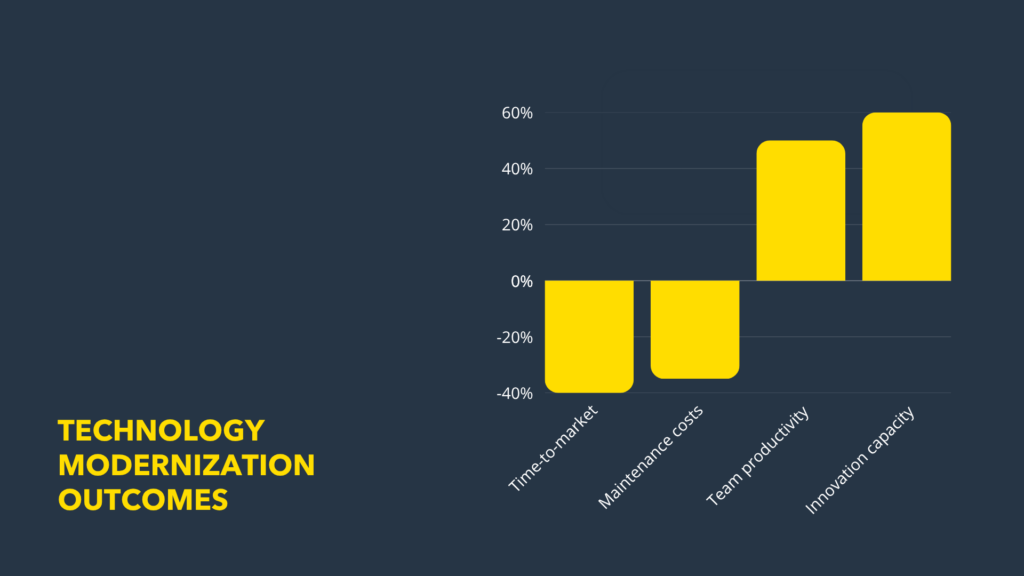
Organizations that invest in modernization initiatives gain measurable business advantages.
Faster Product Delivery
Modern platforms enable teams to build, test, and deploy new features more efficiently. Additionally, automation reduces manual effort throughout the development lifecycle.
Lower Operational Costs
Modern architectures require less corrective maintenance and improve resource utilization, allowing organizations to invest more in strategic initiatives.
Improved Scalability
Updated technology environments support business growth without creating excessive operational complexity.
Better User Experiences
Modern applications deliver improved performance, reliability, and availability, resulting in higher satisfaction for both customers and employees.
Implementing Technology Modernization Without Business Disruption
Many organizations delay transformation efforts because they fear operational risks. However, a structured modernization roadmap helps reduce disruption while delivering incremental value.
A successful approach often includes:
- Assessing existing systems.
- Identifying critical dependencies.
- Prioritizing business objectives.
- Modernizing applications incrementally.
- Automating testing and deployment.
- Continuously measuring outcomes.
This phased strategy allows organizations to maintain business continuity while improving their technology foundation.
Technology Modernization as a Growth Enabler
In BFSI, Retail, and SaaS industries, the ability to adapt quickly often determines market leadership. Therefore, organizations need technology ecosystems that support continuous evolution without being constrained by legacy systems.
Technology modernization is not simply about upgrading software. It creates a foundation that enables faster innovation, greater agility, and more efficient use of development resources.
By reducing the burden of technical debt, businesses can redirect talent and investment toward initiatives that create measurable value and sustainable competitive advantage.
Is your organization spending more time maintaining systems than building innovation? Discover how Xideral’s Digital Transformation services can help modernize your technology ecosystem and accelerate digital transformation initiatives.
Xideral Team