
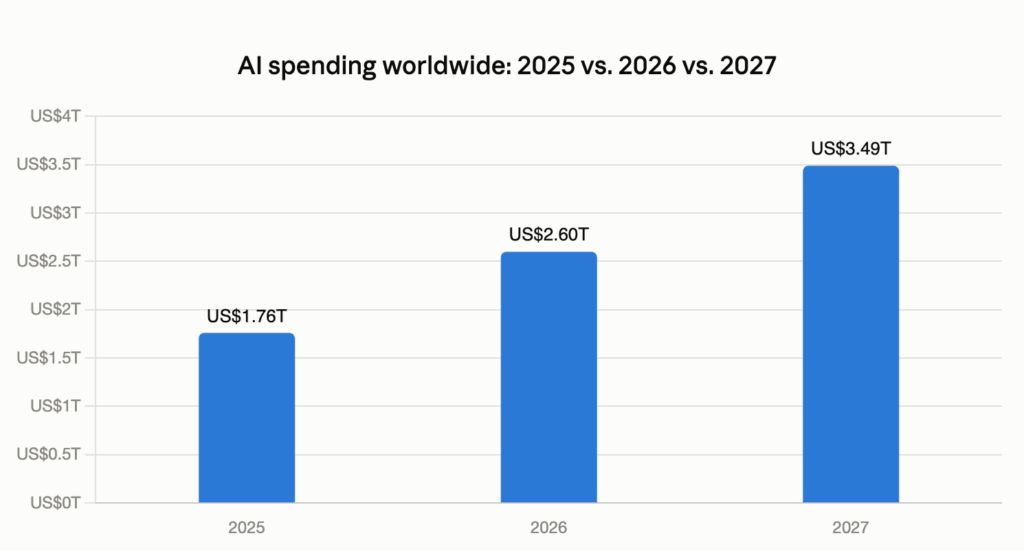
The 2027 IT budget is becoming more than an annual technology expense plan. Competitive organizations are using technology investment to accelerate operations, reduce risk, improve productivity, and create new business capabilities. Gartner forecasts that worldwide AI spending will reach approximately $3.49 trillion in 2027, following 47% growth in 2026.
However, higher technology spending does not automatically create better results. The real competitive advantage comes from knowing where to invest, what to modernize, and which processes to automate.
It is not about spending more. It is about investing where impact is highest.
2027 IT Budget: AI Moves From Experiment to Business Capability
Artificial intelligence remains one of the strongest priorities on technology roadmaps. However, leading organizations are moving beyond isolated AI pilots and integrating the technology into processes that can produce measurable business outcomes.
Gartner reports that 81% of organizations plan to increase AI funding, while many companies still struggle to demonstrate consistent business value from their AI initiatives.
That makes use-case selection critical. Competitive organizations are focusing on applications such as:
- Automating repetitive tasks.
- Predictive analytics and decision-making.
- Customer service optimization.
- AI-assisted software development.
- Intelligent agents integrated into workflows.
The goal is not to implement AI simply because it is a market trend. Instead, companies should identify where it can increase productivity, reduce costs, improve customer experiences, or accelerate innovation.
2027 IT Budget: Cybersecurity Becomes a Strategic Investment
Cybersecurity is no longer simply a defensive line item. It has become part of an organization’s ability to operate, scale, and adopt emerging technologies without proportionally increasing its exposure to risk.
AI adoption is also expanding the attack surface. Gartner identifies threats such as AI application manipulation, prompt injection, deepfakes, and software supply chain risks as areas requiring stronger security strategies.
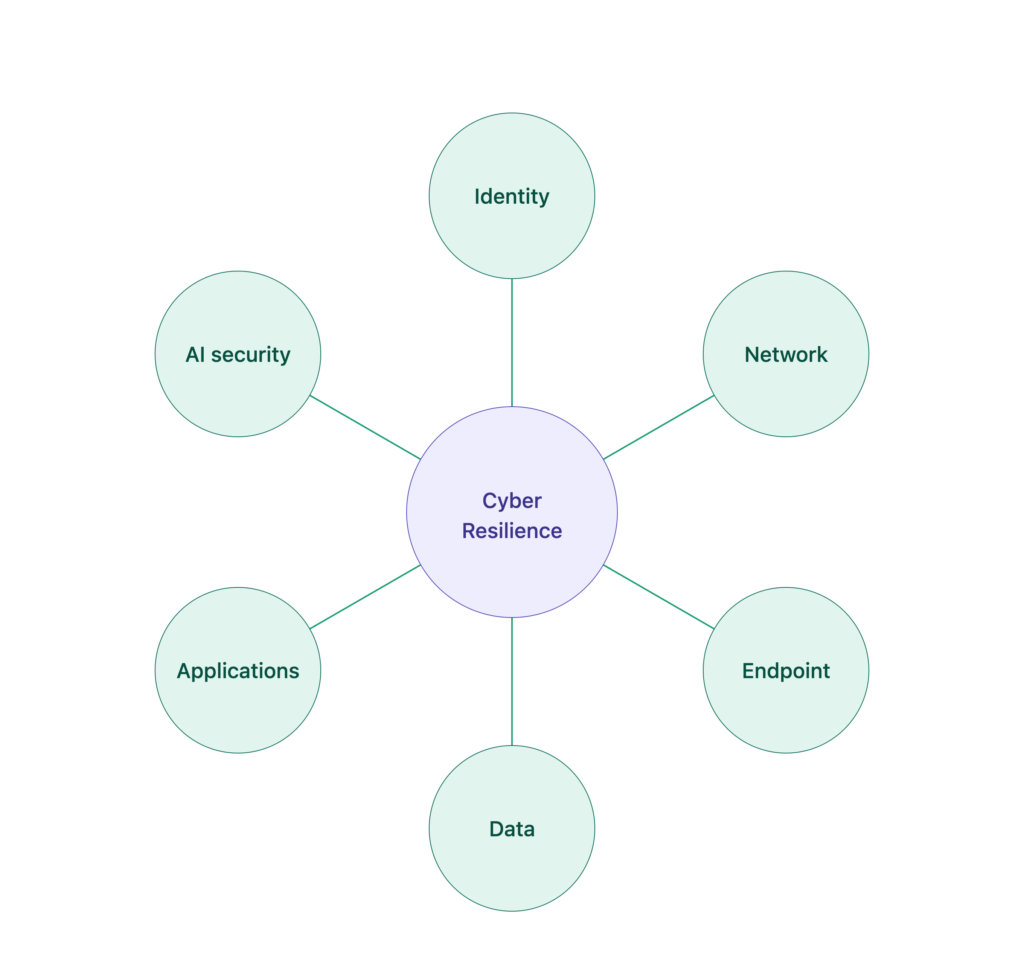
As a result, competitive companies are increasing their focus on:
Endpoint and network protection.
Identity and access management.
Continuous monitoring.
Application and API security.
Data protection & Automated incident response.
AI-specific security controls.
The objective is shifting from reacting to incidents toward building technology resilience.
Modernization: Reduce Technical Debt Before Scaling
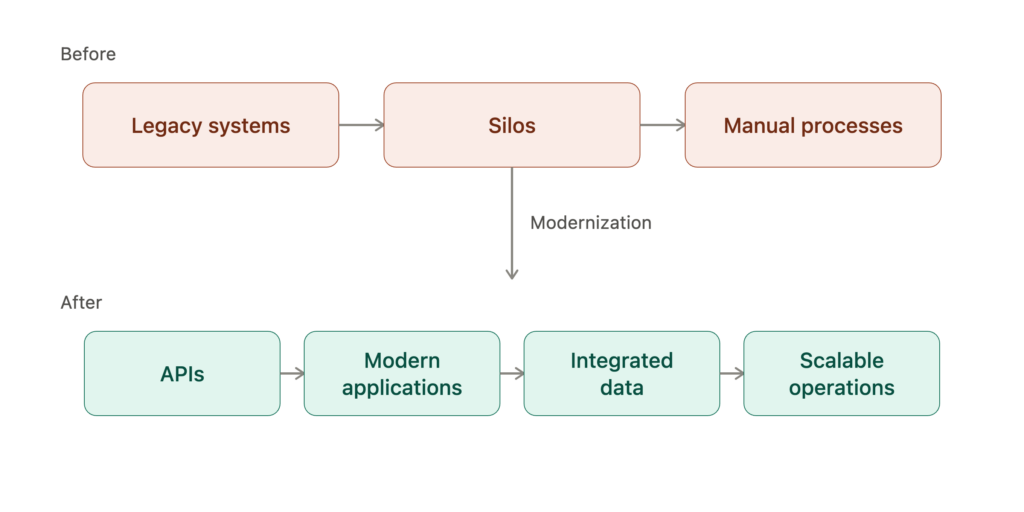
A company cannot build a future-ready technology environment on systems that continuously limit its speed.
Technology modernization helps organizations replace obsolete components, integrate platforms, improve application performance, and create architectures that can support future growth.
However, modernization does not mean replacing everything at once. A more effective strategy starts with business priorities and technical risk.
Companies can prioritize:
- Critical system assessment.
- Technical debt analysis.
- Progressive application modernization.
- Selective cloud migration.
- API-based integration.
- Modular and scalable architectures.
This is where Custom Software can create significant value. When off-the-shelf platforms no longer support specific business processes, tailored solutions can eliminate unnecessary complexity and create capabilities aligned with the organization’s operating model.
Talent and Automation: Investments That Multiply
Technology requires people who can implement it, manage it, secure it, and turn it into measurable results.
Talent therefore remains a critical component of technology strategy. Gartner highlights talent shortages as a major challenge for organizations trying to move AI initiatives from successful pilots into sustainable business results.
At the same time, automation allows technology teams to spend less time on repetitive work and more time on activities that generate higher value.
Organizations can combine both strategies through:
- Upskilling and reskilling programs.
- Specialized technology teams.
- On-demand technical capabilities.
- DevOps and CI/CD.
- Automated quality assurance.
- Intelligent monitoring and observability.
- Workflow automation.
A Software Factory can accelerate this model by providing structured development capabilities and specialized expertise without requiring organizations to build every capability internally.
How to Turn the 2027 IT Budget Into Competitive Advantage
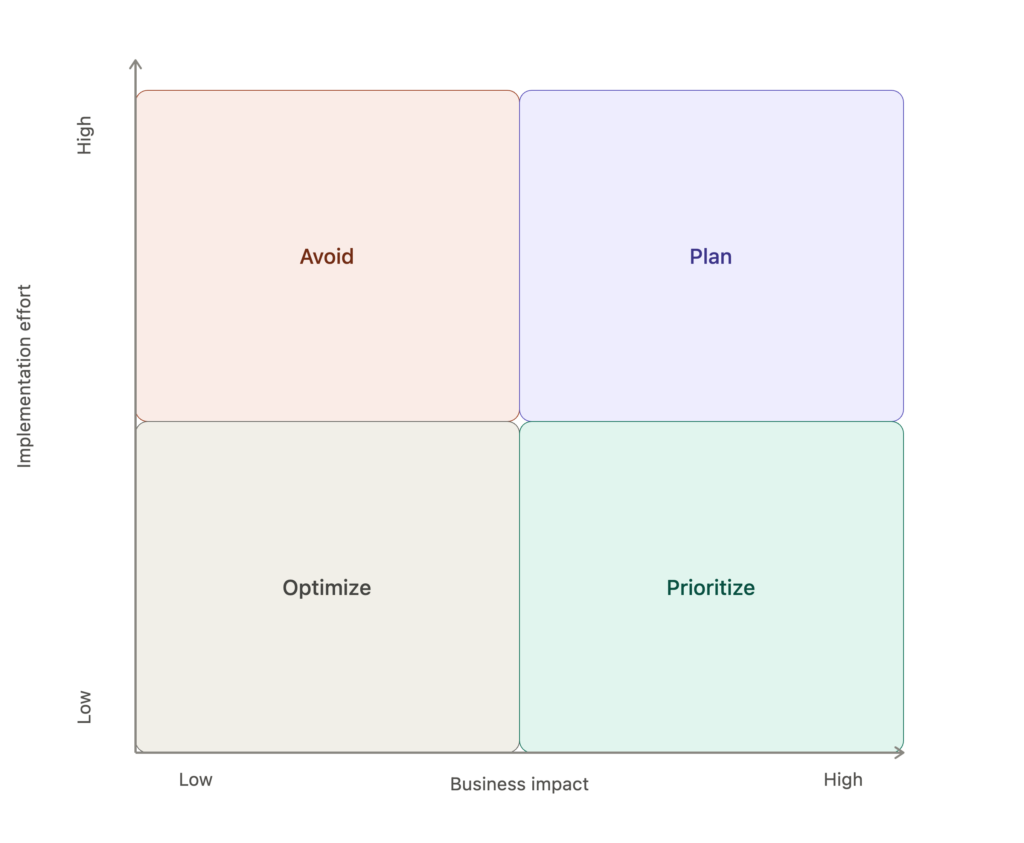
The right question is not simply how much a company should spend on technology. The better question is what results each investment should generate.
A practical evaluation framework can measure every initiative across five dimensions:
- Business impact: What measurable result will it create?
- Urgency: What happens if the organization does nothing?
- Scalability: Can the solution support future growth?
- Risk: What vulnerabilities or dependencies will it eliminate?
- ROI: How will the organization measure the value generated?
This approach prevents companies from distributing technology budgets evenly across every initiative. Instead, it directs resources toward projects that combine high impact with strategic feasibility.
The market already reflects this shift. Gartner reported in 2026 that 75% of CFOs expected to increase technology budgets, while 48% expected increases of 10% or more.
Therefore, competitiveness will not necessarily belong to the organization with the largest technology budget. It will belong to the organization that transforms its investment into better capabilities.
The 2027 IT budget should connect technology spending with clear business objectives: accelerate growth, protect operations, modernize infrastructure, automate processes, strengthen talent, and respond faster to market changes.
At Xideral, Software Factory, Digital Transformation Services help organizations turn technology priorities into scalable capabilities. If your organization is already planning its 2027 technology strategy, now is the right time to identify which investments can generate the greatest impact.
Turn your 2027 technology strategy into measurable business results. Explore how Xideral can support your next technology initiative.
Xideral Team