
From the First ATM to Smart Banking: The Technology Behind the Evolution
Withdrawing cash, checking an account balance, or making a deposit now takes just a few minutes. Decades ago, however, customers had to visit a bank branch during business hours and wait for an employee to process their requests. ATM technology changed this experience by bringing electronic mechanisms, customer identification, and transaction processing together in a self-service machine.
The development of automated teller machines marked a significant shift in financial services. Banks began automating routine transactions, extending access beyond traditional opening hours, and reducing the need for in-person assistance. Over time, these machines evolved into connected financial terminals capable of handling a much wider range of operations.
How Automated Banking Began
During the 1960s, banking services depended heavily on branch employees. Customers who needed cash had to visit their bank, present the required documentation, and complete their transactions during limited operating hours.
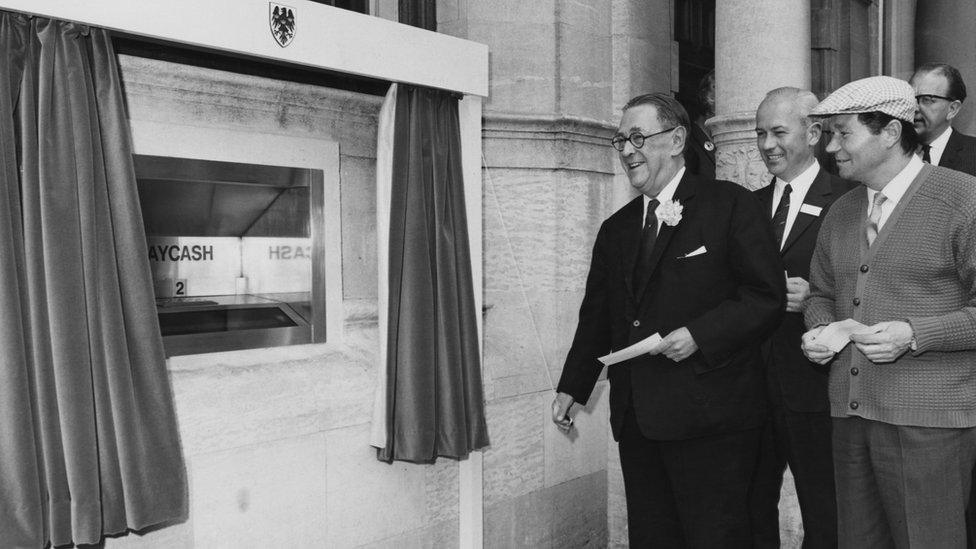
On June 27, 1967, Barclays introduced one of the first modern automated cash dispensers in Enfield, London. Developed by De La Rue under the leadership of John Shepherd-Barron, the machine allowed customers to withdraw cash using special paper vouchers and a personal identification code.
Although the device offered limited functionality, it demonstrated that a machine could dispense money without requiring direct assistance from a bank employee.
ATM quickly attracted interest from financial institutions and equipment manufacturers. Engineers began developing more sophisticated systems to improve customer identification, automate cash dispensing, and make banking services available outside branch hours.
These early developments created the foundation for a new approach to financial services, one that placed automation at the center of everyday banking operations.

How PINs and Bank Cards Changed ATMs
One of the biggest challenges facing early automated cash dispensers involved verifying customer identities. Banks needed a reliable method to confirm that someone requesting money had permission to access an account.
In 1966, engineer James Goodfellow filed a patent for a system that combined a card with a personal identification number, or PIN. His work contributed to the development of authentication methods that later became standard features of automated banking systems.
During the 1970s, electronic authorization systems and bank cards began changing how customers interacted with cash machines. Financial institutions gradually moved toward devices that could identify account holders and process transactions through electronic banking systems.
ATM incorporated card readers, electronic validation mechanisms, and increasingly advanced processing components. These developments helped manufacturers create more reliable machines and enabled banks to expand their automated services.
The combination of physical cards and personal identification codes also established a recognizable interaction model that continued to influence banking terminals for decades.

From Standalone Machines to Connected Banking Networks
Early cash dispensers operated with limited communication capabilities. As telecommunications infrastructure developed, banks gained new opportunities to connect their machines with centralized banking systems.
This connectivity allowed financial institutions to verify account information, authorize transactions, and update financial records electronically. It also supported the development of interbank networks, which eventually allowed customers to withdraw cash from machines operated by different institutions.
During the 1980s and 1990s, automated teller machines expanded beyond bank branches. Airports, shopping centers, supermarkets, and other public locations began offering access to cash through self-service terminals.
ATM continued evolving through improvements in hardware, software, network communications, and transaction security. Manufacturers introduced more sophisticated user interfaces, reliable cash-dispensing mechanisms, and systems designed to protect sensitive financial information.
These innovations transformed individual cash machines into access points within interconnected banking infrastructures. Customers gained greater flexibility, while banks expanded their service coverage without opening additional branches in every location.

When Cash Machines Became Multifunctional Terminals
As digital banking developed during the 2000s, financial institutions began expanding the capabilities of their automated terminals. Machines that originally focused on dispensing cash gradually incorporated additional banking services.
Modern self-service devices can support deposits, bill payments, balance inquiries, account-related transactions, and certain transfers. In Mexico, some financial institutions market these multifunctional terminals under names such as practicajas or multicajeros.
ATM also introduced new ways for customers to interact with banking systems. Depending on the institution and equipment, users can withdraw cash through codes generated by mobile applications, access contactless features, or use additional authentication methods.
These capabilities reflect the growing relationship between physical banking infrastructure and digital financial services.
Rather than operating as isolated devices, modern terminals increasingly connect with mobile banking platforms, transaction-processing systems, and centralized management tools. This integration helps banks provide more consistent experiences across their digital and physical channels.

What Comes Next for Banking Self-Service?
The evolution of automated teller machines continues as financial institutions invest in connected infrastructure, stronger security mechanisms, and more efficient customer experiences.
Biometric authentication, remote monitoring, fraud detection systems, and predictive maintenance tools represent some of the technologies shaping modern self-service banking. These capabilities can help institutions protect transactions, identify equipment problems, and improve machine availability.
Manufacturers are also developing multifunctional terminals that combine several banking operations within a single device. Centralized software platforms allow institutions to monitor equipment performance, manage updates, and support increasingly complex transaction environments.
ATM technology illustrates how automation can reshape a traditional service over several decades. What began as a way to provide cash outside banking hours developed into an interconnected system of physical devices, digital platforms, and financial infrastructure.
Today’s multifunctional banking terminals represent the latest stage of that transformation. Machines once designed to dispense banknotes now help customers complete multiple financial operations from a single self-service point.
Xideral Team