

Today, IT knowledge management has become a strategic priority for organizations seeking long-term stability and growth. However, many companies still rely on a small number of specialists who hold critical information about systems, infrastructure, or business processes.
As technology environments become more complex, this concentration of expertise creates knowledge silos that limit collaboration and increase operational vulnerability. Therefore, organizations must establish effective strategies to distribute knowledge across teams and ensure business continuity.
Why IT Knowledge Management Remains a Major Challenge
Knowledge silos rarely appear overnight. Instead, they develop gradually as employees accumulate experience that is never formally documented or transferred.
As a result, organizations often face challenges such as:
- Dependence on key individuals.
- Slower incident resolution.
- Limited scalability.
- Longer onboarding periods.
- Increased operational risk.
Furthermore, when a critical employee leaves the company, projects may suffer delays, productivity declines, and disruptions that impact business objectives.
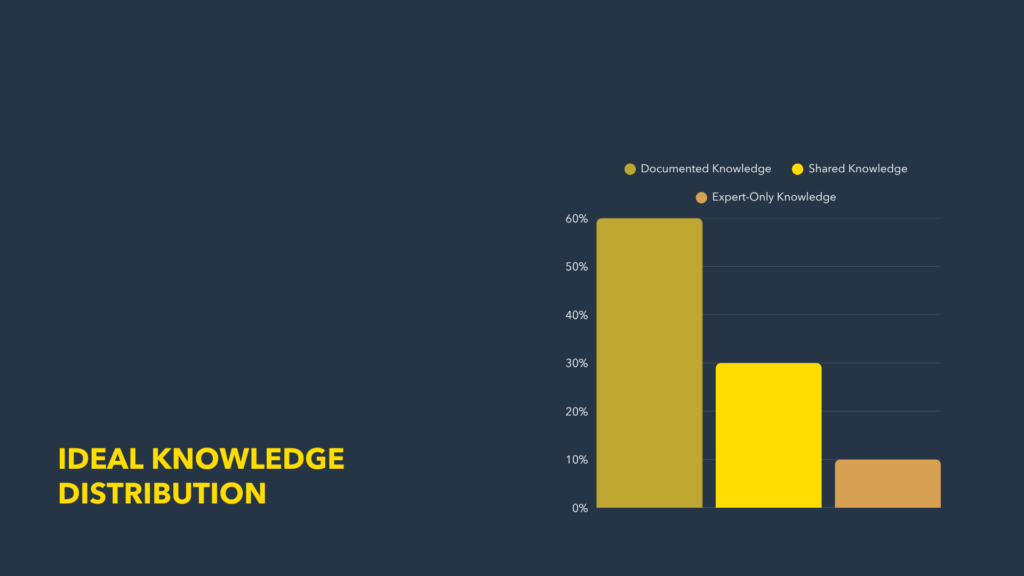
The Benefits of Implementing IT Knowledge Management
Organizations that actively promote knowledge sharing gain significant operational advantages.
Some of the most important benefits include:
Reduced Operational Risk
Documented processes allow teams to maintain productivity even when key specialists are unavailable.
Faster Onboarding
New employees gain immediate access to documentation, best practices, and technical resources.
Improved Collaboration
Teams work more effectively when knowledge becomes an organizational asset rather than an individual one.
Greater Scalability
Companies can expand operations without creating bottlenecks around specific employees.
Additionally, structured knowledge-sharing initiatives help organizations identify skill gaps and strengthen workforce development strategies.
How Structured Training Helps Eliminate Knowledge Silos
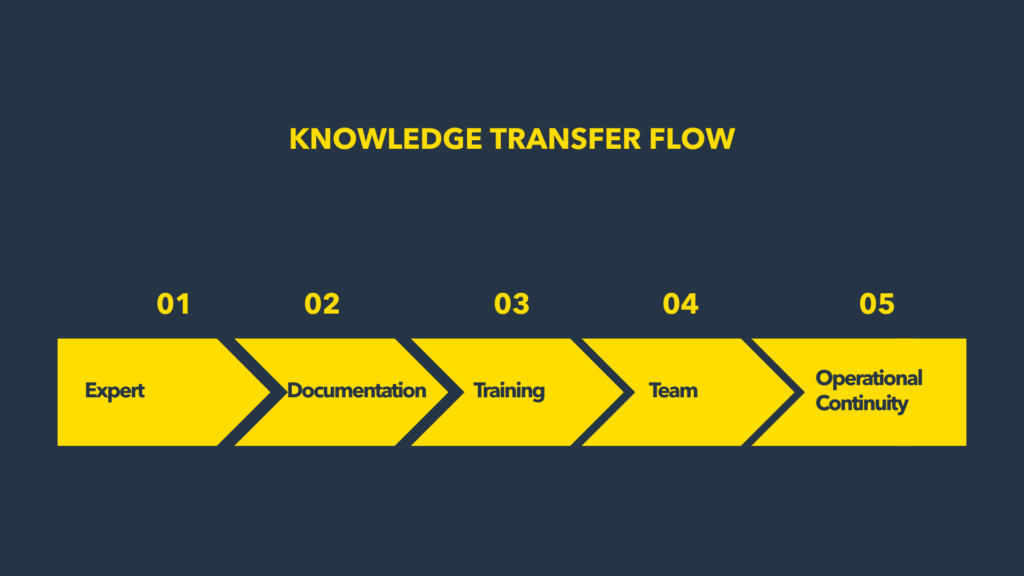
Documentation alone cannot solve the problem. Organizations also need continuous learning initiatives that facilitate expertise transfer across teams.
This is where Training Academies provide significant value.
A structured training model helps organizations:
- Standardize technical knowledge.
- Accelerate internal talent development.
- Create clear learning pathways.
- Reduce dependency on individual experts.
- Support succession planning for critical roles.
By transforming tacit knowledge into accessible organizational knowledge, companies strengthen operational resilience and improve workforce readiness.
IT Knowledge Management as a Competitive Advantage
Organizations that treat knowledge as a strategic asset build stronger, more adaptable teams. While some companies continue relying on isolated experts, others create environments where expertise is documented, shared, and continuously improved.
As a result, investing in knowledge transfer initiatives and structured training programs does more than reduce risk. It improves productivity, supports innovation, and creates a foundation for sustainable growth.
If your organization depends on a handful of specialists to maintain critical operations, explore how our Training Academies and Staff Augmentation services can help you build scalable, resilient, and future-ready technology teams. Visit our services section to learn more.
Xideral Team