
How a Finnish student, a computer, and a penguin ended up creating one of the most important technologies of our time.
In 1991, a 21-year-old student posted a message on the Internet that seemed insignificant at the time.
“I’m doing a (free) operating system (just a hobby, won’t be big and professional like GNU).”
His name was Linus Torvalds, and although he didn’t know it yet, he had just taken the first step toward changing the world, creating Linux.

It All Started with Curiosity
Linus Torvalds was born in Helsinki, Finland, in 1969. From an early age, he was fascinated by computers and wanted to understand how they worked. While studying at the University of Helsinki, he began experimenting with operating systems.
There was just one problem: he wasn’t satisfied with the options available to him.
So, he decided to do something very few people would ever attempt.
He built his own.
What started as a university project eventually became Linux, an operating system inspired by Unix and designed to be flexible, efficient, and open to collaboration.
What Is Linux?
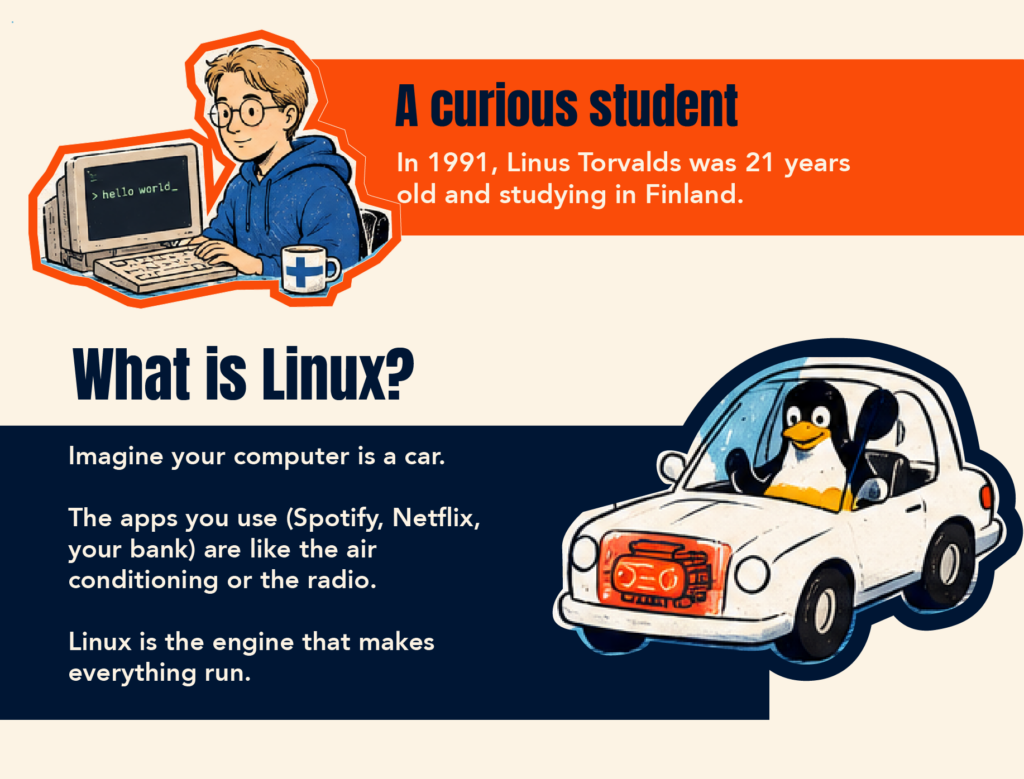
The easiest way to understand Linux is to imagine your computer as a car.
The applications you use every day—Spotify, Netflix, Google Maps, or your banking app—are the GPS, the radio, and the air conditioning.
Linux is the engine.
You don’t always see it, but it helps millions of devices work every single day.
And here’s the interesting part: you’ve probably used Linux today without even realizing it.
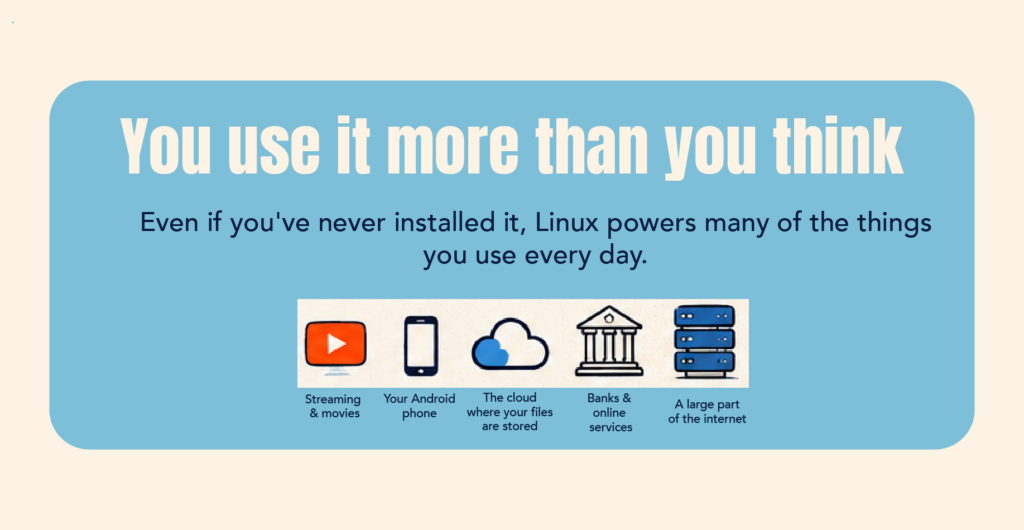
A large part of the Internet runs on Linux. It’s found in servers, cloud services, Android phones, and some of the most powerful computers on Earth.
The Operating System That Conquered the World
What began as a hobby is now a fundamental part of our digital infrastructure.
Linux powers:
- More than 90% of the world’s servers.
- Most of the world’s supercomputers.
- Millions of Android devices.
- Streaming platforms.
- Banking services.
- Businesses, governments, and research centers.
In other words, if the Internet had a backbone, Linux would be a major part of it.

The Story Behind the Penguin
But one question continues to fascinate people:
Why a penguin?
When the Linux community started looking for a mascot, many expected something futuristic or intimidating. Linus had a very different idea.
He wanted a penguin.
And not just any penguin.
“I want a penguin that’s fat and happy after eating too many herrings.”
Yes, that was the official description.
The story became even more interesting when Linus shared that he had once been pecked by a penguin during a visit to a zoo in Australia. While the tale has been told with a healthy dose of humor over the years, it has become an essential part of Linux folklore.
And that’s how Tux was born.
Why Is It Called Tux?
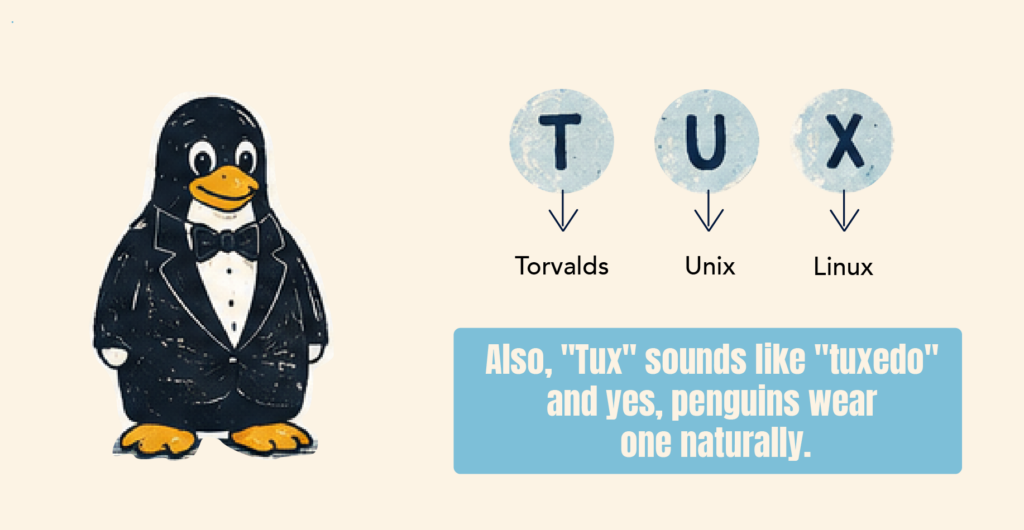
The name “Tux” has more than one explanation.
One theory connects it to:
- T = Torvalds
- U = Unix
- X = Linux
Another points to the word tuxedo.
And if we’re being honest, penguins have always looked like they’re wearing one.
Since its creation in 1996, Tux has become one of the most recognizable mascots in technology.
A Project That Belongs to Everyone
One of the most remarkable things about Linux is that it doesn’t belong to a single company.
Thousands of developers around the world contribute to it every day. It remains one of the largest open-source projects in history and a powerful example of what global collaboration can achieve.
While many technologies are built behind closed doors, Linux grew thanks to a worldwide community.
The Legacy of Linus
More than three decades later, the phrase “just a hobby” still makes people smile.
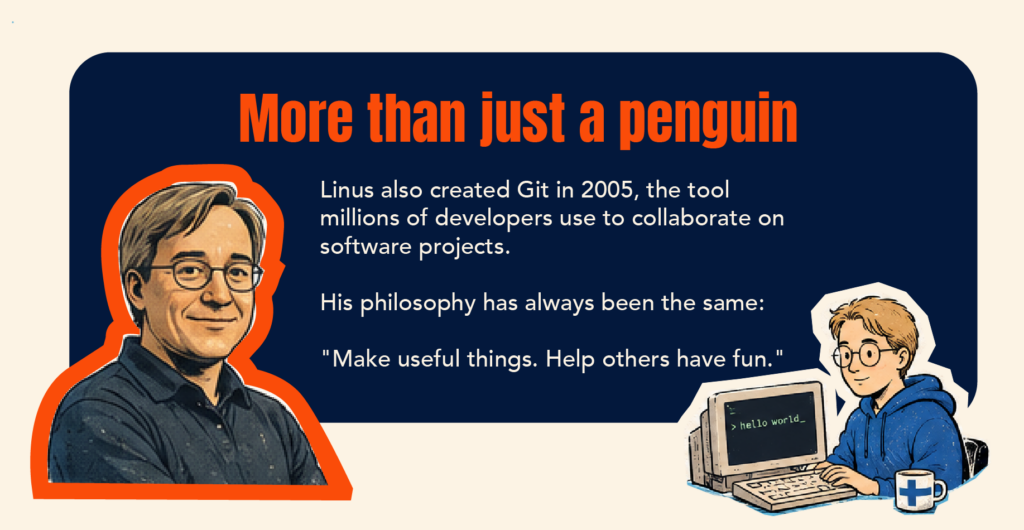
Linux didn’t just change the way computers work—it changed the way we think about collaboration, software, and innovation itself.
It all started with:
- A curious student.
- A computer.
- A message on the Internet.
- And a penguin with too much fish in its stomach.
The next time you see Tux, remember that behind that smiling penguin is a story that proves something important:
The ideas that change the world don’t always come from billion-dollar companies.
Sometimes, they begin with curiosity.
If you want to explore more insights like this, you can visit our blog, Xideral Notes, where we share ideas, trends, and perspectives for tech professionals and organizations.
Xideral Team