

Many organizations operate with an invisible vulnerability. Critical systems, customer relationships, technical configurations, and operational processes often depend on a single expert. As a result, implementing a strong knowledge transfer strategy has become essential for companies that want sustainable growth and operational resilience.
At first, having highly specialized professionals seems like an advantage. Their expertise accelerates decision-making and improves efficiency. However, when critical knowledge remains concentrated in one individual, the organization creates a single point of failure.
If one person can stop an operation, the issue is not talent. The issue is the operating model.
Why a Knowledge Transfer Strategy Matters More Than Ever
Companies invest heavily in technology, infrastructure, and specialized talent. Yet many overlook the processes needed to preserve and distribute organizational knowledge.
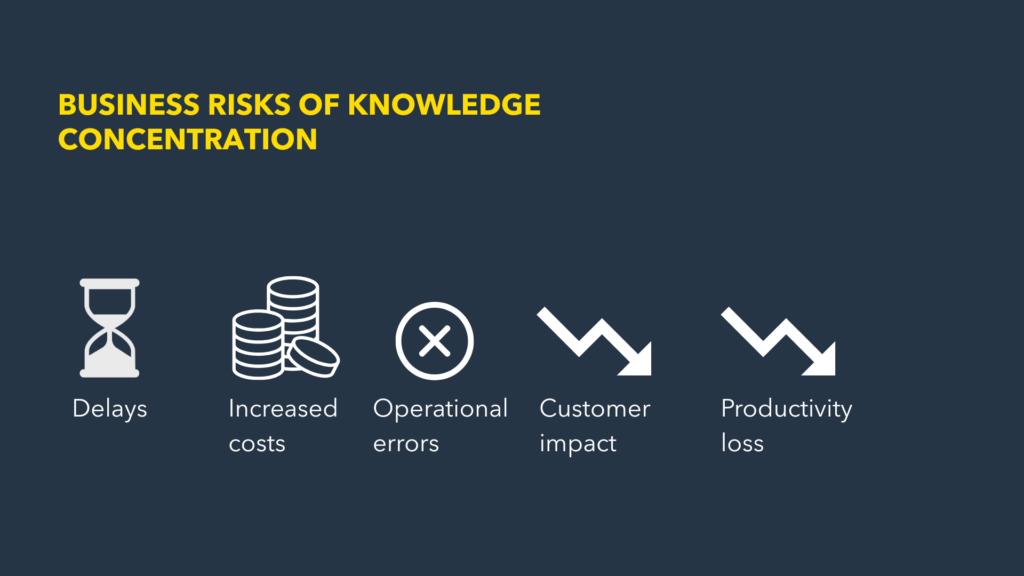
When a key employee leaves, the consequences can be immediate:
- Project delays.
- Increased training costs.
- Productivity losses.
- Operational disruptions.
- Customer service challenges.
In many cases, the real impact appears weeks later. Teams suddenly realize that nobody understands a specific workflow, system configuration, or business process.
Without proper knowledge management, organizations spend valuable time recreating information that already existed.
How a Knowledge Transfer Strategy Reduces Operational Risk
The goal is not to replace specialists. Instead, organizations should transform individual expertise into a shared business asset.
Resilient companies create structured methods for capturing and distributing critical knowledge across teams.
Several practices support this objective:
Standardized Documentation
Critical procedures should be documented using clear, consistent, and accessible formats.
Cross-Training Programs
Cross-training ensures multiple employees can perform essential functions when needed.
Internal Mentorship
Experienced professionals can transfer practical expertise through coaching and mentoring sessions.
Centralized Knowledge Repositories
Organizations should store procedures, technical documentation, best practices, and operational guidelines in a centralized location.
These initiatives help companies scale more effectively while reducing dependence on specific individuals.
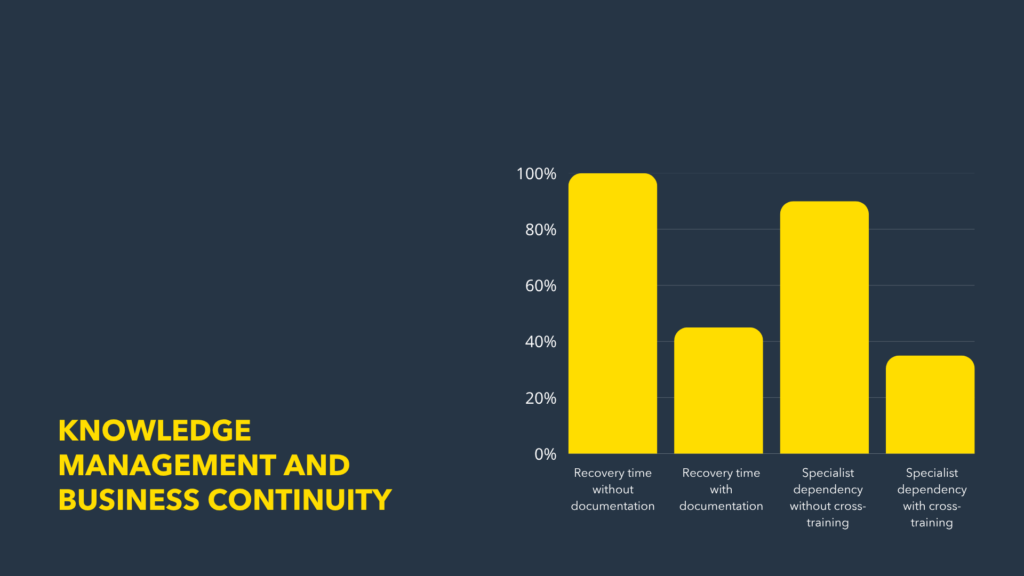
How a Knowledge Transfer Strategy Supports Business Continuity
Business continuity depends on more than hiring talented professionals. It also requires preserving organizational knowledge and making it accessible.
Leading organizations follow a structured approach:
Identify critical knowledge areas
Measure dependency risks
Develop succession plans
Train backup resources
Continuously update documentation
As a result, companies reduce disruption risks and accelerate employee onboarding.
The Role of Talent in a Knowledge Transfer Strategy
Knowledge management requires both processes and people.
For that reason, organizations often combine knowledge-sharing initiatives with talent development programs and strategic hiring efforts.
Training programs help build internal capabilities faster. Meanwhile, recruitment strategies bring professionals who can contribute to documentation, collaboration, and organizational learning from day one.
When companies combine these efforts successfully, they create teams that are more autonomous, adaptable, and prepared for growth.
The strongest competitive advantage is not having an indispensable employee. It is building an organization where knowledge remains, evolves, and creates value regardless of who occupies a specific role.
If your organization depends heavily on a small group of specialists, now is the time to strengthen business continuity. Explore how talent development programs and strategic hiring can reduce operational risk and support long-term growth through a stronger knowledge management culture.
Xideral Team