

Engineering standards for distributed teams have become essential for global companies aiming to scale software development without sacrificing quality. Many organizations expand their technology teams across multiple countries to access specialized talent and accelerate delivery. However, when teams work without shared standards, inconsistencies quickly impact code quality, collaboration, and product stability.
The issue rarely comes from distributed talent itself. Most global teams include highly skilled developers capable of delivering strong technical results. The real challenge appears when companies fail to establish a unified engineering framework.
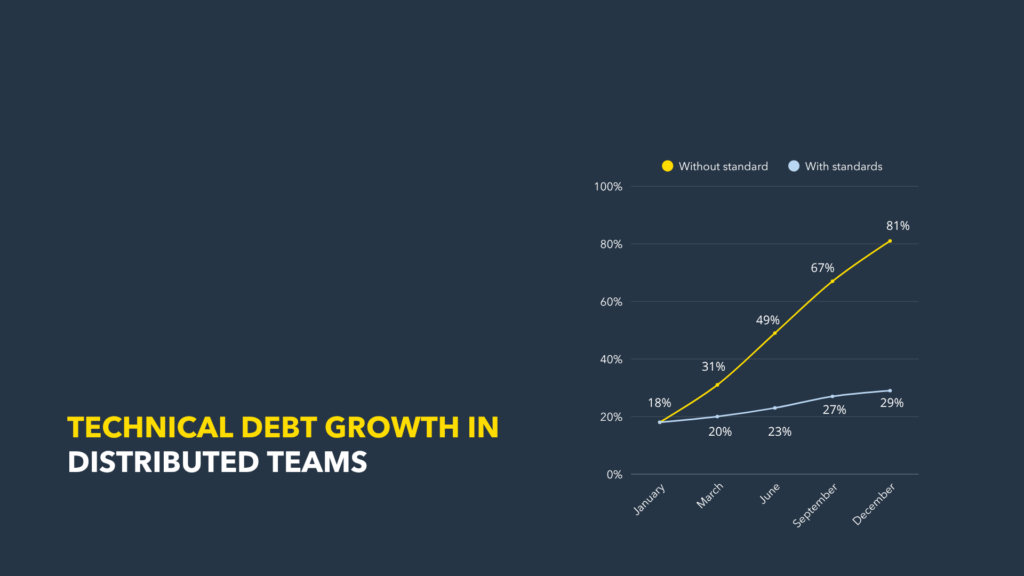
Without standardized practices, every squad may follow different coding structures, deployment methods, or architectural decisions. As a result, companies face growing technical debt, recurring bugs, and continuous rework that slows innovation.
Moreover, disconnected development practices make scaling much harder over time.
Why engineering standards for distributed teams matter
Global technology companies depend on consistency to maintain speed and quality across projects. When developers collaborate from different regions and time zones, engineering alignment becomes critical.
Engineering standards for distributed teams create a common foundation that helps every squad work efficiently under the same technical expectations.
These standards improve:
- Code consistency
- Deployment reliability
- Team collaboration
- Product scalability
- Development speed
- Quality assurance processes
In addition, standardized workflows simplify communication between engineering, QA, DevOps, and product teams.
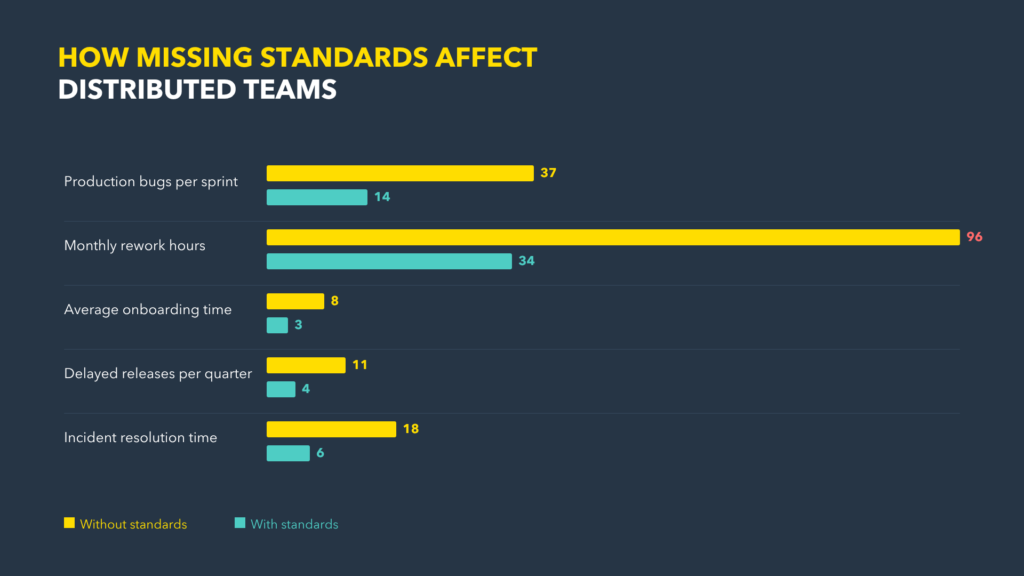
What happens when standards are missing
Teams without clear engineering standards often experience:
- Frequent production bugs
- High technical debt
- Duplicate work
- Inconsistent architecture
- Slow onboarding
- Delayed releases
- Difficult maintenance processes
Furthermore, developers spend more time fixing problems instead of building new features that drive business growth.
How DevOps strengthens engineering standards for distributed teams
DevOps practices help organizations create scalable and reliable development environments. By automating workflows and monitoring quality continuously, companies reduce human error and improve consistency across distributed operations.
Additionally, DevOps standardizes critical processes such as:
- Continuous integration
- Automated testing
- Code review pipelines
- Infrastructure management
- Deployment automation
- Monitoring and observability
When every distributed team follows the same DevOps workflows, releases become faster and more predictable.
For example, organizations implementing unified pipelines often reduce issue resolution time by up to 40% while improving deployment stability across global teams.
Staff Augmentation supports standardized software development
Many companies need to scale quickly while maintaining technical consistency. In this scenario, Staff Augmentation helps organizations integrate specialized talent without losing control of internal engineering processes.
However, this model only succeeds when companies establish clear technical standards from the beginning.
External developers adapt much faster when organizations provide:
- Architecture guidelines
- Coding conventions
- Documentation processes
- Quality requirements
- Testing protocols
- Shared development frameworks
Otherwise, every new integration increases operational complexity and slows delivery cycles.
Moreover, standardized environments allow distributed developers to contribute efficiently from day one.
Training Academies improve technical alignment globally
Technology companies also face another major challenge: maintaining consistent technical skills across distributed teams.
Training Academies help organizations align engineering knowledge while reinforcing internal development standards.
Instead of relying only on individual experience, companies can train developers under shared methodologies and technical frameworks.
As a result, organizations can:
- Improve engineering consistency
- Reduce recurring development issues
- Accelerate onboarding
- Strengthen collaboration
- Standardize best practices
- Keep teams updated continuously
Additionally, structured technical training helps distributed teams maintain the same development mindset regardless of location.
This creates stronger collaboration, higher productivity, and more scalable engineering operations.
Global distributed development will continue growing as companies search for specialized talent and scalable technology operations.
However, successful scaling requires more than hiring skilled developers.
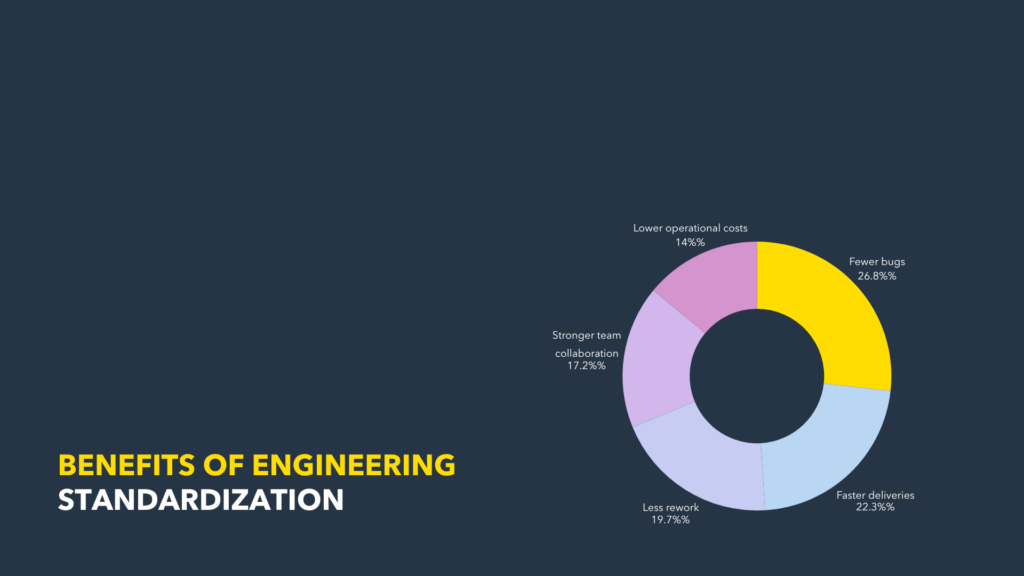
Engineering standards for distributed teams help organizations reduce technical debt, improve software quality, and accelerate delivery across global environments.
Companies that combine DevOps practices, Staff Augmentation, and continuous technical training create more aligned, agile, and scalable engineering teams.
Because the real problem has never been distributed talent. The real challenge has always been the lack of standards.
Looking to strengthen your global engineering operations with scalable processes and specialized talent? Explore how Staff Augmentation and Training Academies can accelerate your technology goals at Xideral.
Xideral Team