

In fintech and software companies, building a strong software quality assurance strategy has become essential. However, many organizations still prioritize development speed over testing, which leads to critical failures, poor user experiences, and operational losses. Although teams release features faster, they also increase the probability of production issues that directly affect customers and business performance.
“Software does not fail in production. It fails earlier, but nobody noticed.” That idea reflects one of the biggest problems in modern software development. When businesses reduce QA cycles to accelerate delivery, defects simply move faster toward end users.
How software quality assurance impacts fintech platforms
Fintech environments process transactions, authentication systems, banking integrations, and sensitive data in real time. Therefore, even small defects can escalate quickly into financial, operational, or reputational problems.
When testing loses priority, companies often face:
- Payment failures
- Authentication issues
- Data inconsistencies
- Platform downtime
- Customer-facing bugs
In addition, digital experience directly impacts retention. Multiple UX studies show that over 70% of users abandon platforms after repeated technical failures or severe performance issues.
Many organizations assume QA slows development down. In reality, the opposite happens. Strong testing frameworks reduce rework, accelerate fixes, and improve product stability from the earliest stages.
Why software quality assurance is a business strategy
QA does more than detect bugs. It protects revenue, brand reputation, and operational continuity. Companies that integrate testing early usually launch more scalable and reliable products.
Modern QA strategies include:
Automated testing
Functional validation
Performance testing
Security and compliance checks
Continuous QA within CI/CD pipelines
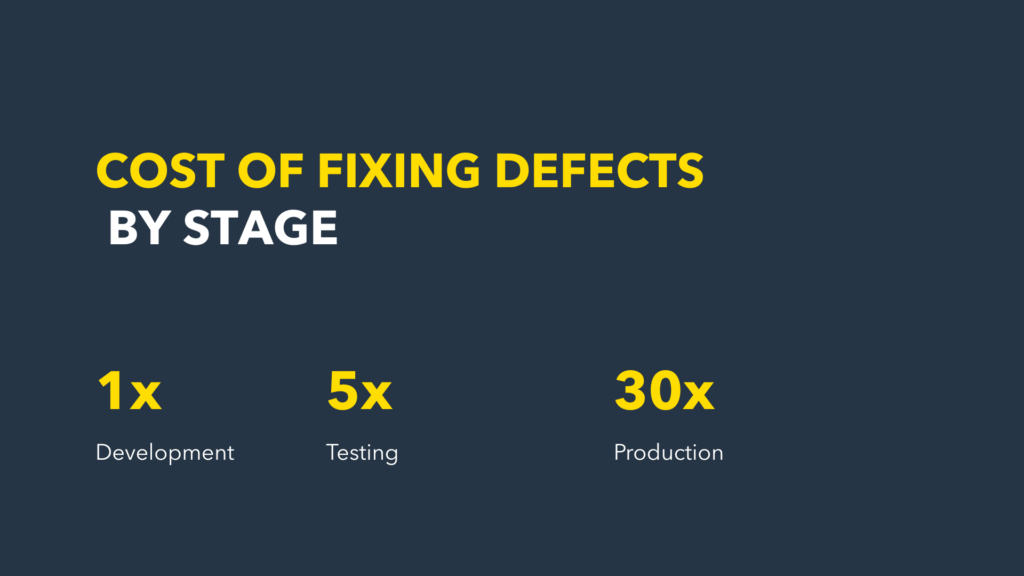
Additionally, fixing defects in production can cost up to 30 times more than resolving them during development.
The danger of accelerating releases without testing
Competitive markets push companies to deliver features continuously. However, releasing software without proper QA creates a false sense of productivity.
Teams may deploy faster, but they also increase:
- Critical incidents
- Support tickets
- Customer frustration
- Recovery time
- Technical debt
Moreover, every production issue consumes engineering resources that could otherwise focus on innovation. That is why mature technology organizations treat QA as a core business function rather than a secondary phase.
In fintech projects, where users expect secure operations and constant availability, software stability becomes a major competitive advantage.
How a Software Factory strengthens QA from day one
Working with a Software Factory helps companies integrate testing processes across architecture, development, and deployment. Instead of reacting to production failures, teams can prevent risks early.
A complete QA strategy often includes:
- Automated testing frameworks
- Continuous monitoring
- Performance validation
- QA integration into agile sprints
- Scalable testing processes
Furthermore, specialized development partners help maintain software quality even as products and teams grow more complex.
Companies that prioritize QA reduce failures while improving user experience, operational stability, and long-term scalability.
If your company wants to build more stable and scalable digital products, explore how a Digital Transformation partner can help you implement strategic QA from the beginning.
Xideral Team